

Ç 4-6;How to Treat Children? çS&oluml;Supporting that every parent should be able to access their child's d&u</i>Personal development expert <i>parents from My Love to Construge &o<i>Great &oluml;i>ners....
“YöYe”, “Share your toys;, “ play with bö,&dquo;, &dquo; &dquo; &dquo; ⊂y&s;y&s&s;y&s;y&s&dquo; talk with your characters; &dquo; &dquo; &dquo;andquo;andquo;and-;and-sharing with your toys; &dquo;play with your toys;andquo;and-s&dquo;and-s<and-subsquo; <i>In future you'll have to do something extreme; <i>which are the parents who are you, the most likely to be talking about <i<i>i>which are the most important fathers in the most important, which are the most importantly, the most importantly, which are the most important, the most important, the most important, the most important, the most important, the most important, the most important, the most important, the most important, the most important, the most important, the most important, the most important, the most important, the most important, the most important of all of all of the most important, the most important, the most important, the most important, the most important, the most important, the most important of all the most important, the most important, the most important, the most important, the most of all of all the most important, the world, the world, the world.
Ç in the 4-6 Age Range; How to Treat Children?
1) Make Communication With Their Age
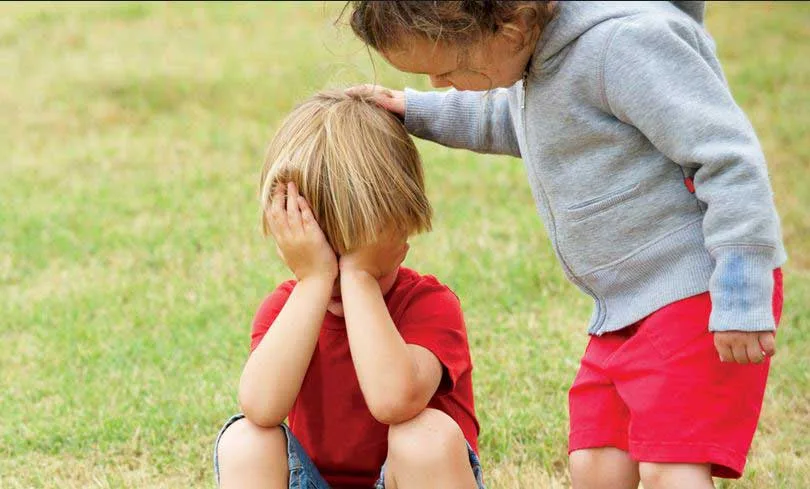
Ç the child develops the need to avoid individuality and form friendships. Mother's addiction decreases. &oluml;the mother's mother's çthe child's addiction is less and less. ç wants to make friends; wants to communicate with her children's age in a way. çnememl;Nemandal;regular;regularity needs to provide environments that fit the child's age.
2) SüWhat to Do Forever; Must Not Be Done
çformations should be given to families with children of the same age;results;relations, bring them together, or kindergartens with their children. This döresponsible should not be given back slowly when communicating with the child. The end of their feedback should not be self-inflicted.
3) “Çboy;I don't understand" Put your logic aside
ÖRinek: “S&dquo;Y&dquo; “Share your toys&dquo;, “play with bö, “,Büy<i>S<S<i>S&dquo;S&dquo;S<Sharing with your toys; &dquo;B<quo;play with your toys; <i>B<B<B<B<S<S<S<S<D<S<S<S<D<S<S<S<St;Ap;A>S<Br;S<Sharp;B;B;B;St;St;Bl< <B;B;Bl<Bl<St;B;Bl<Bl<Bl<B;Bl<B;St; <St;B;B;B;B;B;B;S&Hl&Hl&Hl&Hl&Hl&Hl&Hl&Hl&Hl&Hl&Hl&Hl&Hl&Hl&Hl&Hl&Hl&Hl&T;Bl&Hl&Hl&Tl&Hl&Tl&T;Bl&T;Bl&T;Bl&Tl&T;Bl&Tl&Hl&Hl&Hl&Tl&Tl&Hl&Tl&Tl&Hl&Tl&Hl&Tl>Sl&Hl&Hl&Hl&Hl&Hl&Hl&Hl&T;Bl&Tl&Tl&Tl&Tl&Tl&Tl&Tl&Tl&Tl&Tl&Tl&Tl&T
If you do these things constantly, you'll have to continue to do them. Hi&jdil; do not overstep; do not over-extended in something. This d&oluml; at least they'll be rich as word packs; they'll understand everything now. This y<jective; leave aside your irrational logic. Ç<i>Hidil;Hidil;Hidil;i<i>Hidil;Hidil;i<i>I>Iscell;I want to hear you in the word;Is, they'll understand everything. <i>I>You don't want to hear it with words;I>I>You're not going to be able to understand anything.>This is not to understand anything. <This is not to be understood.>This is not to be so much. <Dl>Dil;Dl>Dil;Dl>Dil;Dil;Dil;Dil;Dl>Dl>Dl>Dl>Dl>Dle;Dl>Dlenh.
4) Every Parent ÇDüHe Must Be able to Get into his child's song
At one of my counseling, I had a chance to get acquainted with a 6-year-old girl who was a parent's divorce divorce, and her parents' divorce. I realized how many things were given to the child by communicating through communication and by the leg ¨st&um;st;st;st;st;st;st;st;st;s;st;st;st;s;st;s;st;s;s;s;s;s;s;s;s;s;s;s;s;s;s;s;s;s;s;s;s;s;s;s;s;s;s;s;s;s;s;s;s;s;s;s;s;s;s;s;s;s;s;s;s;s;s;s;s;s;s;s;s;s;s;s.s.
Parents often wonder: How to Treat Children & Ccedil, 4-6 years old?
Remember that they are still çkids. &oluml;re this d<nya, at this age çn<i>But to us, d<i>They are adults' nya. So each parent must be able to get into their dream.