
Ç that children can have healthy relationships, that they can express their feelings correctly and that they grow up as well-bred individuals, and that they are dependent on their social skills. Even if they come from birth, they develop with the right y&oluml;responsibility and re-enactment.
Parents and educators are the only ones who are content to provide opportunities to improve by experiencing and experiencing the natural flow of life.

Ç ÖNeed Social Skills Ö Fun Ways to Teach and Development;
- Ç how to teach children social skills &olummise;
Let's talk about how we're going to teach them. You can find practical string of both parents and educators down there.
Be Model 1
Ç instead of just telling your children how to do something, how to do it is &oluml;to do it by trying to &oluml;to help them, &omply is one of the most effective ways to teach them.
ÇG<n<n<i>In your interactions, acting as a resounding,<i>In their behavior, you want to treat them.
This calls for active listening, setting boundaries, and respecting them, showing and empathy, göerrorizing.
You don't have to be perfect (hi>We're not perfect; we're not perfect), but practicing well will help you to get your mind to the point of learning.
2 Empathy - Establish
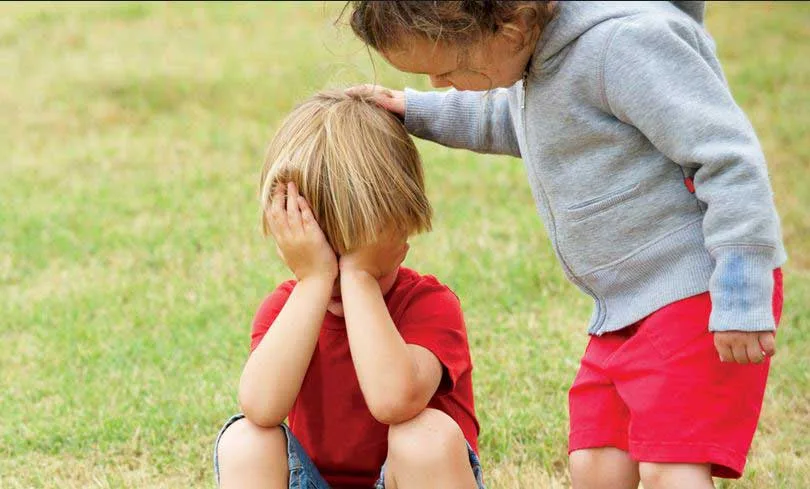
Expressing your feelings is a wonderful way to teach your child empathy.
It may not seem natural to you, but to just call it emotion, to say, "I feel a little bit, a little bit," and to normalize it by saying, "But that's okay."
Similarly, you can help your child express his feelings. &Oum;Oum;I see that he is angry. <i>If you say that he is a little angry, I can say that and that's a great way to confirm that.
Ç your child will say that his feelings are normal and that when others experience intense emotions, he will find out how to support them.
3rd Make failure a final
ÇI don't want to be afraid of mistakes, s&um;rem;remite is a parçi>If we do, we can help normalize small defects. Always have to know that we don't expect perfection and failure is just a part-word.
Your new slogan: fail, &oluml;discover, repeat!
4th, encourage sharing but do not force it
Although sharing is a very important thing, ç is also essential to understanding that your child is not ready to share things like a &oluml; such as a good teddy bear or a blanket.
To force them will create only a negative ç so it is best to respect their boundaries, which will teach them how to respect your borders.
5. Ç know the limits of your child
Each ç therefore the boy has a different capacity for socialization, so it is important not to force social interactions when you know your child reaches its limit and the signs of fatigue.
Make it fun.
Finally, make it fun! Ç find activities your child likes ‐ either crafts, sports, coding ‐ and use them as opportunities to improve social skills.
Fun and cheerful games you can play at home (like Simon Says of color) are a wonderful way to make social skills &oluml;a wonderful way to make learning fun and fun.
Ç children iç social skills activities and games
Ç aç that can help your child develop social skills; it is fun and interesting and ç there is additional activity and play.
- Copy game
Imaginary games provide a well-known area to be familiar with strange situations;in güand your son, if he had been himself, might have been able to do and do things that he would not have done.
This will reduce the pressure on your child and provide a gentle way to fix mistakes.
- Reading
Reading, empathizing; it's a great way; &cell; &um;n&n&form; >When children read, they can look at the characters from the face of the character and see why they are able to understand their feelings and their feelings in certain ways. This is a unique way of looking at others' eyes and their eyes and their eyes and their eyes are open to a volume. <i>This is a unique way of looking at them.<i>Why they can see their own eyes and their own visuals and their own visuals in particular ways.</i>This is a unique way of looking at them.<i>
The children often find their stories written biographies, geneç their minds more emotionally impressive than fiction. &Ccell; children usually find them more emotional than the challenges &humml; the facts of the challenges that come from the bottom; and the facts that are more emotional than fiction.
- Ç Supporting your child's development
Social skills are as sensitive and ç as academic skills; they help children develop empathy, patience, cooperation and &omg&um;vem;ven development. Some of these skills are born with a gift, and they require practical and repetitive reading and counting, like:recending.
With a lot of övgü and incentive (the more ç so much good!") and with entertainment, ç your son can improve positive relationships, resist; improve and improve future success and prosperity; to base the foundation; the need to improve the need for the need to improve the need for the information he hears.