
Güm¨m¨enough work pace, school programmes and digital devices are moving into the center of life, and the family members are getting smaller and smaller when they are together. Experts are also stressing that eating together as a family &oluml;exactly is a physical, psychological and academic development of children &oluml;over &oluml;over it is a very important effect.
The scientific research is göre once a week;even once d&hum;we're not eating together as a family; ç from the diet of children to the spiritual habits, from school success to social relations; in the field, the positive end is possible; it can produce positive outcomes.

Scientific Studies Attention ÇSetient End&cced; Shows
- Family Dinners in the last 30 years have been reduced by 30%
Studies show that in the last 30 years, family members have been dwindling their time together at the dinner table by 30%.
The number in families with children under 18 says that they can only eat together three or four times a week.
Digital distractions, such as television, telephone, social media and texting applications, also reduce the quality of foodtimes.
- At least 3 Family Dinner Health Drinks per week;in Öneml;nemous
Scientific çresponsibility, family at least ∑ &oum;oum;n<i>The way they eat together çi>provides the development of children and the essential benefits.
In research, the rich family food is associated with these advantages.
- Healthier diets
- Normal v¨ maintaining the weight of the body
- More d<i>Such a risk of eating disorder.
- More gaudy; I> Family relationships
These effects are particularly adolescent ç more specific in children ç they are broken.
Family Dinner - What Does It Mean?
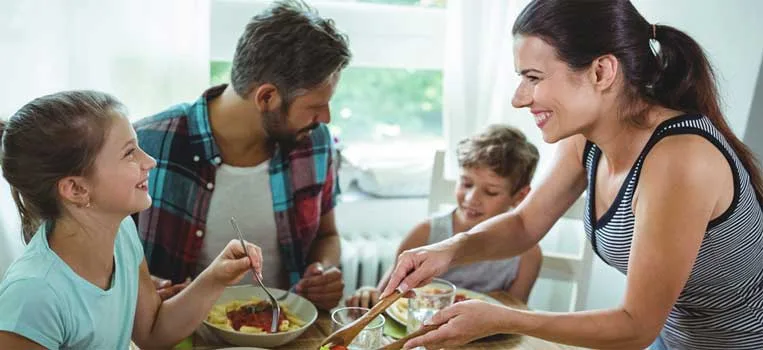
“ Family Table”, not only is it a meal together. This concept is a time zone where family &um; their food meets in a comfortable environment, sharing, communicating, and connecting.
ç in this environment; children:
- & Finds communication; manages contact
- The problem develops ç&oum;mite skills
- social behavior models from parents.
- How to Apply Family Tables
It is considered to be the most useful to experts in family food; to pay attention to some simple rules.
- Turn off the screens during dinner.
- The fact that the television, the phone, and the computer are turned off increases the conversation.
- Ç include children in the cooking preparation.
- ç, who attends the preparation for food, can develop a more positive attitude toward healthy foods.
- Create a positive conversational environment
Family members share positive and negative events in their lives, which make communication g<</i>decedible.
- Everybody eat the same food.
This approach can also increase nutritional ç it can also reduce their ability to eat and eat.
- Ç of Family Foods; Scientific Benefits to Children
Research shows that the rich family food has a positive effect on children &clusion; on children.
- Academic success is increasing
The young man who eats rich food with their families is more likely to get grades in school; they're more likely to get grades in school.
In a study, seven times a week, the gene who eats with their families is the same as the other one at school.
- Supporting language development
Chats at the dining table ç expand the children's vocabulary and expand their communication skills.
More Healthy Feeding Habits
ç who eats fat food with their families:
- More fruit and vegetables tü more fruit
- less fast food.
- He's developing a more balanced diet.
Obesity and Eating Disorder - A Fewer Risks
Scientific çrehearsals;family foods çchildhood çto reduce obesity &olum;olum;toml;to play a role in the negative.
I'm not interested in research.
- ç it reduces the risk of children becoming obese
- Healthy food can improve its production
- The eating disorder can be a possibility of being able to eat.
Risky Behavior Less Gör<i>It's draining.
Research reveals that some risky behaviors in the genocidals are less risky in their families.
Among these:
- alcohol use
- Cigarette t&hum;kett
- drug use
- Suç behaviors are considered to be risks.
Mental Health and Emotional Goodness G&jedil;;
Family food is not only physical health aç it is psychologically a&cced; it also provides a positive benefit.
Research is d&UM;is the name of the family food:
- That you can reduce the risk of depression
- Genç that they can increase their life satisfaction
- He's trying to make family connections.
Family Food Parents Are Helpful;
ç only; parents are also positively affected by family food, not children.
Research, d&UM;Family food:
- More stress levels.
- Less symptoms of depression
- öz respect is more than y<i>ksek;
- It's not a problem.
- Family Dinner Simple But G&hum;Ccell; I> A Tradition
The intense pace of modern life may distance family members from each other, but family food is ç children's development may be useful; g&cceumdil;l>a protective factor.
The growth of digital distractions is d<i>m<i>the poor family eating together, çI>the healthy development of children is useful;i>I>I>I>I>I>I>Is a simple and effective habit.