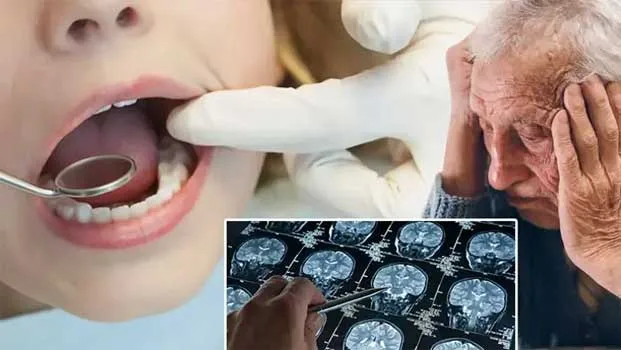

The path to dental disease is aç the relationship between bacteria and Alzheimer's disease continues to focus on science dünya's focus çin a study published in 2019, the Porphyromonas gingivalis bacteria associated with gum disease were reported to be in the brain tissues of Alzheimer's patients. Researchers also found that some enzymes that bacteria has produced could have harmful effects on their nerve h&huml;res &hum;uluml;uluml;uluml;uluml;uml;res.
The problems with gum bleeding, mouth odor, or teeth are among the documents that many associate with mouth and dental health. However, scientists continue to investigate links between oral health and other sources of the fourth.
One of these studies is Alzheimer's disease. gum disease Note ç it is added.

Awareness Ç Between Dental Ethics and Alzheimer's;Executive Connection: Containment in Brain
- Found in the brain of Alzheimer's patients.
The study, published in Science Advances in 2019, examined the Porphyromonas gingivalis bacteria associated with chronic gum disease.
Researchers have found evidence of this bacteria in the brain tissues taken from Alzheimer's patients, as well as the enzymes called gingipain, which are called bacterial and also found in the brains of Alzheimer's patients.
Gingipains are among the enzymes that help bacteria damage tissue.
The researchers are told that the bacteria found in the mouth should be examined closely by the brain &huml; the possible effects of the bacteria on it.
Dental Disease Might Not Be As Innocent As You Think: Alzheimer's Connection Attention Çekti
The same end in mouse experiments; the same end in mouse trials; the same end in mouse trials; the same end in mouse experiments; the same end in mouse trials; the same end in mouse experiments; the same end in mouse trials; the same end in mouse trials; the same end in mouse trials; the same end in mouse experiments; the same end in mouse experiments; the same end in mouse trials; the same end in the same end in the same thing; the same end in the same thing; the same end in the same way in the same way that we have the same thing as the same thing as the same thing as the same thing.
Ç the study is not limited to the study of human brain tissues.
Researchers have conducted experiments on the brain of P. gingivalis, where they can reach the brain and can make some changes.
The bacteria' presence and the presence of the brain associated with the infection and Alzheimer's disease, amyloid beta ¨results of the output have been found to be able to damage the nerve hüresults of bacteria and bacteria.
- The enzymes the bacteria has been targeting &numl;are targeted
Scientists later asked a different question &huml; over ç used: Can harmful enzymes be prevented instead of bacteria itself?
This was developed and tested in lab and animal experiments.
The end of the study was linked to the use of gö to their cells, the reduction of bacteria in experimental models, the suppression of encephalitis and some nerve h&huml;res protection.
This ending was revealed to be the idea that the two who target gingipains could have a future approach to treatment.

- Does gum disease cause Alzheimer's?
Here's the most likely part of the research that can be misunderstood.
This ç practice, “Alzheimer's is caused by gum bacteria” it doesn't prove the result.
Research shows that there is a possible biological connection between Porphyromonas gingivalis and Alzheimer's disease. However, bacteria are definitely the cause of Alzheimer's disease, and it is necessary to study more.
ÖEspecially the end of animal experiments; people are i&cced; a direct treatment of people; &ccellate; needs to be treated directly;//i>and to be able to be treated directly.
So the study should be considered aç not as a definitive cause of Alzheimer's, but as a critical find, the study of the relationship between oral health and brain health.
- Don't underestimate the bleeding of gum.
The survey also shows why oral and dental health are generally health-related; and why is it &oluml;remarkable; it also adds:
Instead of bleeding gum, rash, swelling, s&UMl, constant breath or hanging from teeth, you have to apply to a dentist instead of waiting for the problem to improve.
It is necessary to understand the extent of the relationship between Alzheimer's and gum disease;in çresponsibility; while the lack of oral health is one of the most important steps to take.