


Advertisement
Although the spur on the heel was treated, if the pain does not go away, the cause of the pain may not be only the protrusion in the heel bone. Heel pain can be caused by plantar fasciitis, excessive load on the foot, improper use of shoes, tension in the calf muscles, problems with the heel fat pad, or nerve compression. Especially when the pain intensifies when taking the first steps in the morning and repeats throughout the day, determining the real cause of the pain is important for the success of the treatment.
Orthopedic and Trauma Specialist Prof. Dr. Murat Demirel, stating that the condition known as "heel spur" in the public is often evaluated together with plantar fasciitis, emphasizes that in cases where the pain continues despite treatment, it is not necessary to focus only on the bone protrusion seen in the X-ray,
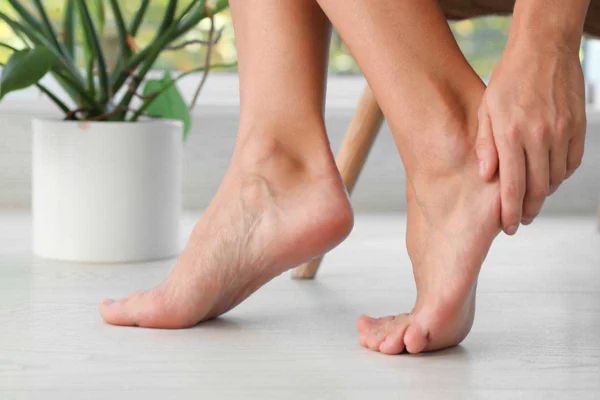
What Causes Heel Spur?
The bony protrusion under the heel bone may not cause any complaints in some people. On the other hand, in people whose X-rays do not show a clear heel spur, severe heel pain can also be seen. Therefore, stating "there is a heel spur" in the imaging result does not necessarily mean that the real cause of the pain is in this bone protrusion.
Why Does Heel Spur Not Go Away?
There can be multiple reasons for the heel spur not going away or the heel pain continuing for a long time. One of the most common problems is the continuation of the load on the plantar fascia.
Prolonged standing, working on hard surfaces, excessive weight, sudden increase in exercise, improper shoes, and mechanical problems related to foot structure can increase the load on the plantar fascia.
In addition to this, the pain that is initially considered as a heel spur may also be due to a different problem. Thinning of the heel fat pad, nerve compression, stress fracture, or some rheumatic diseases can cause similar complaints.
Therefore, in cases of persistent heel pain for weeks or months, it may be necessary to re-evaluate the diagnosis instead of repeating the same treatment.
Is Heel Spur the Same as Plantar Fasciitis?
No. Although heel spur and plantar fasciitis can be related to each other, they are not the same condition.
Heel spur refers to the bony protrusion that can occur on the lower surface of the heel bone. Plantar fasciitis is a painful condition that develops in the area where the plantar fascia, a connective tissue, attaches to the heel bone.
The plantar fascia extends from the heel bone to the toes and plays a role in supporting the foot arch.
In some people, plantar fasciitis can occur together with heel spur. However, the presence of a heel spur in the X-ray does not necessarily mean that the pain is caused by this bone protrusion.
Therefore, the answer to the question "why does pain occur if there is a heel spur?" is not always the spur itself.
Why Does Heel Spur Not Go Away?
There can be multiple reasons for the heel spur not going away or the heel pain continuing for a long time. One of the most common problems is the continuation of the load on the plantar fascia.
Prolonged standing, working on hard surfaces, excessive weight, sudden increase in exercise, improper shoes, and mechanical problems related to foot structure can increase the load on the plantar fascia.
In addition to this, the pain that is initially considered as a heel spur may also be due to a different problem. Thinning of the heel fat pad, nerve compression, stress fracture, or some rheumatic diseases can cause similar complaints.
Therefore, in cases of persistent heel pain for weeks or months, it may be necessary to re-evaluate the diagnosis instead of repeating the same treatment.
Why Does Heel Spur Not Go Away?
There can be multiple reasons for the heel spur not going away or the heel pain continuing for a long time. One of the most common problems is the continuation of the load on the plantar fascia.
Prolonged standing, working on hard surfaces, excessive weight, sudden increase in exercise, improper shoes, and mechanical problems related to foot structure can increase the load on the plantar fascia.
In addition to this, the









