#Reclamation
The colon cancer that occurs in the large intestine is usually 50 years old #result;result;results are d&oluml;m<m<m<m;m<m;m<m;m<m;m>Str;m<m>Str;m<m<I>Str;Str<l<Str<r<r<Uml;l>Str;I>Strmolence of colon cancer,<I<I>The cancer that occurs in people above its 50 years old and over the body,<I>Im;Impert and the cancer that the cancer that the colon should be scanned in the colon should be scanned in the coloniceptical body after a certain.
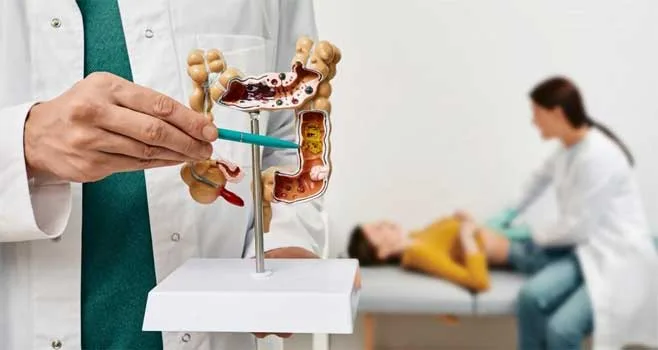
Gör¨lmation frequency plays a critical role in the growing form of colon cancer. Note that unsanitary diet can cause colon cancer çInvestigative General Surgery Expert Prof. Dr. Abdullah İgci briefed on colon cancer and treatment.

In what Conditions Should Colonoscopy Be Done?
Colonoscopy After 40!
Colon cancer 15’i family or genetics; these are more geneç at age gö&rü 85% are also available in non-family areas. Therefore, those who do not have colonochtal cancer in their family should be followed by colonoscopy once every 5-10 years after 50 years.
The family's colonoctal cancer is &oluml;yküs¨ and the people found are often given a colonoscopy every 5-10 years after 40;regularly çok önemal;
Who should get a colonoscopy?
- Unexplainable abdominal pain or weight loss,
- Long sürenal diarrhea or constipation,
- Anemia that didn't respond to treatment,
- Blood in the stool;r<i>ress;
- Early diagnosis and treatment of bowel polyps (etsi çinfectives)
Early Introductions Not Happening
A occedil with colon cancer; a person who has a hiç in early stages of the disease does not have a symptom. So when the symptoms are revealed, the cancer must be performed in a certain age range without any evidence.
#Reclamation
Kolon En ÖNeedful Why Polyps
The colorectal cancers are growing from 85% of polyps in the colon. But it can't be stopped from causing cancer, except for some types of polypeptal cancer. So the colon with the scanning colonoscopy is polyp görürürüd<l<l>In the column, it's diagnosed in polypeptomials without cancer.
♪ I'm a real-life ♪
What Causes the Disease?
In the formation of colorectal cancers, the diet diet is also considered in the middle risk group, where the diet is measured as a mild risk factor and alcohol, while the production of the diet is a small number of red meat tüthe addition of the large intestine is determined by polyp in the lower intestine;the extra fat diet is also considered in the middle risk group.
Advanced age, birthplace and geographical bölge, related diet habits, genetic gene-regular polyps (family polypsosis) in their thick intestines and long-term &uluml;lcertal cancer risk in those with a colitis is y¨ksek.
#Reclamation
What's the Ground for Colon Cancer?
The path to colon cancer is a lot; the risk is different; the signs are:
Old age:The people diagnosed with colon cancer are büy&cceuml;k&ccemdil;most of them are 50 years old;y&um;kt&mul;r. Colon cancer geneçpeople may be göreml;but çok less görürür<r<r<r<r<i>I>I>I>I>I'm not sure that the cancer is the same.
A personal cholesterol cancer or polyp öyküs<: If you have colon cancer or adenomat&oluml;z polyps, the risk of colon cancer in the future is more than high;
Inflammatory bowel conditions:The chronic inflation of the colon, such as the syllabus and Crohn disease, can increase your risk of colon cancer.
The genetic syndrome that increases the risk of colon cancer: Geç, of your family's generation; the most genetic syndrome can increase your risk of colon cancer.
Colon cancer in the family & yk&um;: If you have a parent, a sister, or a child with a disease, you have a better chance of developing colon cancer.
D&UM;S&H&H&D&D&D&D&D&D&D&D&D& &D&D&D&D&D&D&D&D&D&D& &D&D&D&D&Colon cancer and rectum cancer can be associated with a low diet in fiber terms.
A sedanter lifestyle: D&UMl;Further physical activity can reduce the risk of colon cancer.
Diabetes: Diabetes and people with resistance to thelin increase the risk of colon cancer.
Obesity:In people who are obese, compared to people who are considered normal weight, the risk of colon cancer and colon cancer is &oluml;l>the risk of immolence is y<i>the risk of higher risk of higher life is high.
Cigarette:Cigarettes iç the risk of colon cancer may increase.
Alcohol: Heavy alcohol abuse increases your risk of colon cancer.

Overfat Foods - Triggers Colon Cancer!
Watch Out for Feeding Habits
Some vitamins play a protective role in colon cancer. These are vitamin A, C, D and E. These are the vitamins that protect from colon cancer or reduce the damage done by disease and so forth.
From the age of risk, you must have a colonoscopy once every five or ten years and a once-a-year look at the gaita in secret blood.
When should the Doctor be Gö?
- Don't forget to go to the doctor!
If you feel a constant change in blood or bowel habits in stools or any sign of colon cancer, do not fail to make an appointment with your doctor. Talk to your doctor about when you will begin the colon cancer scan.
The manuals usually allow colon cancer scans to start at 50 years old. Other risks, such as family &oluml;i.e., may be more frequent or early screening if you have any other symptoms.
Early Diagnosis I&cced; In Scavengers Must Follow
Early diagnosis of colorectal cancer iç some symptoms of the disease are essential. Changes in the fecal habit, constipation and diarrhea, the lute of thinning colon cancer in the gaita are the conditions where blood comes along with gaita and blood loss is always needed to be examined and further examined.
The most common organ of colon cancer is liver
Colon cancer is açar. In advanced colon cancers; in the abdomen pain, swelling, massing, fluid collection in the abdomen or other organs, the fist&numl;l can be formed in between. It is the most cccedil; the organ where the colon cancers are spreading is the liver. Therefore, the liver is also under d&mult; it is also the same thing as the zene following. /i&mbsp;i&m;/i>
Colon Cancer: Single and Most Effective Treatment Surgery
Surgery is successfully performed and when the cancer bö is removed with the lymphs around it, the patient's life and quality are also resounded and quality is y&uluml. In surgery, the cancer of the colon is removed and the rest of the intestine is reattached and the bowel is reattached by standing together.
In recent years, these surgeries have been laparoscopic, aç from the abdomen wall; the cancerous part of the colon is ç the entrail is reattached and the intestine is reattached. Some post-op patients are also doing chemotherapy.