CURRENT NEWS

First Electronic Receptor Developed in Human Skin

The electronic receiver can do various body measurements, track the activity of the nervous system.

First Electronic Receptor Developed in Human Skin
13 March 2013
Publication Date
13 March 2013
Last Updated

First Electronic Receptor Developed in Human Skin

¨ImageAlt13376¨

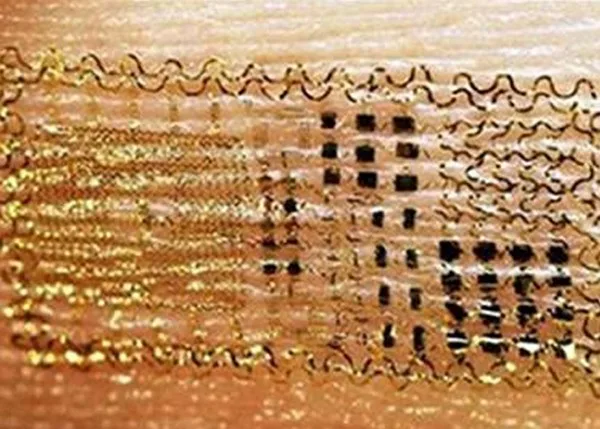
After projects such as electronic tattoos and flexible batteries, US researchers developed the first electronic receiver to be printed directly on human skin, signing a principle.


Electronic Tattoos Can Make Various Measures


The Rogers Research Group, based on Illinois University, has managed to produce sensors that can be installed in the first skin printed on 3D printers, and the electronic receiver, considered the next step after electronic tattoos, can make various measurements of the body, and can track the activity of the nervous system.


According to the Engadget website, the electronic receiver can measure the hydration of the skin, heat and electronic signals from the brain and muscles.


It Is A Good Harmony With Your Skin


Compared to electronic tattoos that have an elastic polymer surface, the polymer surface of new electronic sensors is printed directly on the skin, thus providing good match for the skin, which is 30 times thinner than the previous trials.


Electronic With Tattoos Entering Water


John Rogers, a research team who's been explaining to the Technology Review, is a significant detail we've noticed in our new study,
Elastomer madda needs You can only use a rubber stamp to process ultra-talent electronics on skin, which prevents the electronic receiver from falling easily from the skin in the shower or in the pool, like an electronic tattoo.


After the sensors are processed on the skin, researchers use a liquid bandage to create a protective layer of electronics. Electronic sensors, approximately. Two weeks later, it swells and falls, and engineers are describing this as a state of abandonment of epidermic electrons.


To make electronic sensors longer, technology needs to be placed under the skin. Based on the speed of the sensors, It doesn't seem like it's gonna take much time to get down.


3D Printers - How Does It Work?


Digital
One of the latest examples of technology 3D printers, which are 3D, are physically converting 3D objects designed in digital space into the latest product.


Especially 3D printers that industrial companies use to produce all kinds of machine parts, days with traditional methods, In fact, it takes weeks of production. It reduces its processes in a few hours, and it's developed 3D CAD software, especially plastic materials, that saves costs and time with zero errors.


tvmsnbc