Child education, pedagogy, behavioral issues, child health and nutrition, adolescent guidance, child psychology, development, and book recommendations.
The questions about the factors that threaten our food safety were answered by Prof. Dr. Dilek Boyacıoğlu, head of the ITÜ Food Engineering Department.
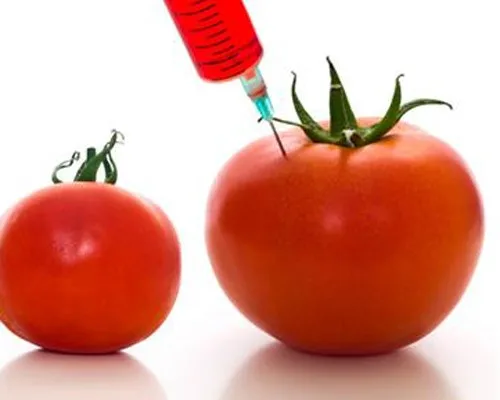
In addition to scientists who argue that GMO products have many benefits, such as more resistant and more abundant products can be obtained against insects and disease, the use of pesticides can be reduced, some scientists argue that GDO products are harmful to human health, corrupting the nature of natural products against the environment and causing biological pollution.
What about GMO products that split the world of science in half? What products do we have in our country? What are the differences between organic products and good agricultural products? The questions that are being asked about the factors that threaten our food safety, were answered by ITÜ Food Engineering Department Director Prof. Dr. Dilek Boyacıoğlu.
What is GMO called genetically modified organisms, and what are the effects of human health?
Genetically modified organisms are applications of modern biotechnology. Genes were modified with traditional diarrhea studies, and this way they were produced resistant plants against diseases. They were produced. But these applications are more accurate, more quickly, more direct, more quickly to the conclusion today, and this was possible through a technology developed after the '70s, called recombinant DNA.
So genetically modified organisms are a system that modern technology gives people. And they have a lot of reflections in medicine. GMO foods are obviously the product of this technology. There are four GDOLU agricultural products that are traded, approved, and are now made freely for all international institutions. These are the products that are sold to countries. These are corn, canola, cotton, soybeans. So these four agricultural crops are the most highly traded products in the world. Four are products that are being sold to all international institutions and all of them are the products that are being imported to countries.
Other than that, there is a class of food processing assistants that are used in food production. What are these? For example, organic acids are also produced with this technology, such as microorganisms that start the fermentation called the start of the first culture.
I'll give you an example of GMO: In November the People's Republic of China made a decision for two products. One was allowed to farm GDO, one was corn and the other was rice. This was a very important decision. Because it was a very important decision. This was a basic food of China. Turkey is fed by rice in China as it feeds by wheat and bread. This decision was intended to increase a great yield. China will not only feed its own country at the same time.
China has been very supportive of GMO research for many years. It has been doing these research with a very large government support. So the public who made this decision is the public who has made this addition. The EU has been the biggest importer in this business environment. While Europe has developed this decision as a decision outside of these statements. Why is this important? Because this change will affect the EU and will reach Africa. So with this decision, China is now the most important importer in this business environment. In a sense, Europe has developed this decision in order to make this multinational decision and to take over this situation, for example, by the way of the country's very important decisions, in order to govern the country today.
Another problem with the EU was with the World Trade Organization. You know the World Trade Organization is an institution that is trying to ensure that the world's trade is fair. But let me tell you this: The World Trade Organization has absolutely no scientific evidence that this is dangerous if a food material is prevented from entering a country. It is based on scientific evidence. However, without scientific evidence, it does not allow this situation. GDO has lost the EU to the US on the issue of product trade. Because GDO has not offered any scientific evidence that the product is harmful.
It's very important that the science axis does not slip off, and in a sense, there are ideas that might be very different wrong if we slip off this axis. Then consumers are surprised at what they believe in in the world. In fact, the person who has every idea is talking about street milk can come out, for example, someone who says that they're buying milk inside the plant, and maybe even showing the crude filters might be enough to keep up with these phrases, because street milk will affect human health because of the presence of disease-producing bacteria. In fact, these evaluations should be done directly in science-oriented, and perhaps even in order to be shown in order to prevent the right information.
GMO products don't have any health damage, so we have to figure this out?
No, they're approved. If it's harmful to health, they can't pass through the approval procedure. I'm saying this for four approved and traded products. Can't this be four, five? Scientific developments are very fast in this area. And the freemantation-starter cultures or fermentation bacteria that we use in food production can be produced with the same technology.
It is possible to separate the GMO legislation in the world into two titles: there are countries that are allowed and are not required to be declared in any way. There are countries that are allowed to be allowed, but there are countries that are subject to the declaration. Now, basically, the assessment of these products in terms of human health is based on the principle of equivalence. So in every sense, it will not be different from the traditional equivalent. In every sense. In fact, it is not just the presence of a foreign gene, for example, but the amount of an allergic component, is increasing, like other synthesis mechanisms. So it is necessary to look at a large picture like this.
These assessments are based on the principle of equivalence. Now, for example, in countries such as the United States, the declaration is not mandatory; the declaration is old; the planting is free. Food companies can clearly state that food labels are GMO-free if they do not use such products in their own production. They can use this in tag information within a marketing strategy. But this is completely contrary to what I said. The best example for the second situation is the European Union countries, which are already in Turkey, in the framework of EU Participants, have to comply with the EU Food Movation and have done this in large part of the EU Food Movzuat (E).
Now, the situation is different when we look at the EU: consumer reactions in Europe are very organised. The consumers are responding through civil society institutions, and naturally their anti-GMO voices are echoing a lot, and as a result, the economic gains that this technology will bring are higher, but it has to be limited to EU legislation. But there are still more than 20 approved products in the EU today.
Even at the foods, they say there's GMOs, and we often hear the damage from him from the experts.
In Turkey, legislation is similar to EU legislation. Ours is a little bit more limiting. This is that GMO can be the plant of seeds in the EU, but they are based on imports. They can produce very little. But what does they do for raw materials? They buy from the United States, they buy from Canada, they buy from China now.
And when we look at our country, the last time we had a biosecurity law, we had a product banned; there was no planting. The legislation was just allowing for testing, it was being proactive to research. But we can also imagine that GMO research is blocked in our country, with this law of security, because there are bureaucratic obstacles in Turkey that will take a really long time to continue a study in this area. We are actually in the last sector of the EU.
If there is no research, it can't be because how can we develop our own kind? Without being dependent on abroad, our country should develop its own kind. This is also how it should reduce its dependence on imports. I believe that there is a lack of communication with society. If people have concerns, they need to be answered, scientifically. It's the public that is essentially responsible for communicating risk. The communication of this risk needs to be done with society. It needs to be told, of course, the fact that the truth is a factor in the society, and that scientists are also separate opinions.
We, we care deeply about the ideas of you scientists, who have generally negative explanations of the matter on television and on the Internet, are very easily accessible to the ideas of scientists who have...
There is one thing, I mean, the assessment of these risks is unfortunately admissible from scientific foundations. Recently, experts from the GMO scientific panel were invited directly from the European Food Safety Institution. These speakers expressed their surprise at how the GMO responses were strengthened in our country. See, I made a call on the Internet on the way to that panel. When I wrote GMO, the search engine gave me four million or so results. But when I wrote it as afflatoxin, mykotoxin, what was the difference between them?
Aflatocs are 100 percent proven products that have cancer in a scientific sense, and unfortunately we have a lot of problems in preventing molds, and unfortunately, cancer makers have been created because they can't be stopped, and there are 4 million similar limits in all the world countries, but we believe that scientists can cause a molecule cancer. So now, when there are 39,000 results for a certain poison, there are no evidence of health in the world, what do you think is the point of this?
So we can eat in peace?
We have to rely on the results of the scientific world; but we also have to perceive the dynamics that exist because of the questionable nature of technology and science. In short, the information can change, improve, add new. For example, nano-food is now on the agenda. But as every new technology has been done, there will be reactions in this case. Some researchers can also assess these reactions as fear against newphobia. The science has shown that there is an affatoxins in the 1960s. Since then, there has been a very high level of measures being taken. But there has been a miracle that a miracle by a Swiss bio-drologist, but there has been no way of being a fear of newphobia. The world of the world is not a safe from the present.
We used to run into kids' products called GMO-free in ads...
It is not allowed to be said to be GMO-free according to our legislation. If, for example, the US-like declaration had been old and the companies could compete, this could be released, but since we are not in the situation, we are not allowed to have a statement in our country that it is GMO-free.
How much more important should we respect organic products, and organic fruits and vegetables are worsening than other products?
The pestilation event is extremely limited, so it could be a risk of decay. Because the conditions and practices after the harvest are extremely important to ensure safety. For example, during storage phase, carbon dioxide can be stored longer by increasing gas and reducing oxygen. Some storage technologies need to be used with the cold. If there is a flaw in them, then the shelf life will be naturally very short.
In a sense, the life span may be reduced until it reaches the consumer's table, but I want to say that it's a system based entirely on certifying production, and there's no lab analysis to prove whether it's organic or not.
The institutions that certify organic products are also approved by the Ministry of Agriculture and Village Affairs, so there are rules and regulations, such as how far the field is to the road, and how many years later the planting can be done.
The agricultural practices are very detailed so that the organic system can be organic. Who is watching and approves of the certificate institutions. Food safety of these products is not different from other products. Especially after harvest practices are very important.
The presence of the magnetoxins produced by mold has been reported in literature. Mold development must be under control. When you look at literature in the world, a general opinion is not quite the same. When you study a lot of literature, we see that the risk of mold development and the presence of the poisons we call mictoxin can increase in organic products. The main reason is that they are actually after harvest.
Organic foods, as traditionally equivalent to product safety, need to be observed in the direction of these dangers. Product analysis needs to be done. While pesticides can be reduced, other dangers can be caused. Food safety is essential. It needs to be analyzed by certificate agencies.
Organic products have the Ministry of Agriculture and Village Affairs seal on them, and we consumers are trying to buy the products we see.
Okay, that's right, that's how the system works.
What are the differences between good agriculture and organic products?
Good agriculture can be briefly defined as GAP. You can also think of it as a set of rules for agricultural practices. For example, good production practices called GMP are in food productions. These are a series of hygiene codes that are designed to ensure the safety of the product. The same is true for agricultural practices. Good agricultural practices are very important because they also reduce the amount of agricultural medicines you can use because it includes better protection.
Does that mean the risks in good agriculture are lower than the risk of organic products?
It's not easy to maintain balance. The whole point is to focus on product safety. Food security is actually a very large chain. A chain that reaches back from the field or the farm to the consumer's table, starting with the field and starting with the food, for example, as food or medicine, and in its milk, its egg, its remains.
For example, the use of antibiotics in animalism is very important, but almost 20% of the milk produced is entering large businesses, and control mechanisms, and more intensive rules will come with these new negotiations.
Good agricultural practices allow use of pesticides, but it does contain less medicine than traditional agricultural products, and of course for the manufacturer, there should be a very serious training mechanism for these applications, such as the collection of vegetables with gloves or the absence of the toilet in the field.
What do you think of the concentration of plant-meal cleansing that helps to remove all kinds of germs, pesticides, paraffin and fertilizers, do you think it has any beneficial or harmful effects?
I don't know what the content of these formulas is. They should be allowed from the Ministry of Agriculture and Village Affairs. They should be through the evaluation filter because they're being used directly in food. And I want to say that in terms of agricultural medicine, it needs a very good wash, and in some vegetables and fruits, peeling away the shells can take away the drugs.
Does it help to keep you in the vinegar water?
The use of vinegar water is particularly useful microbiologically, and a very good wash for pesticides can partially cleanse, and even keeping them waiting in the refrigerator can cause the remains of this drug to be torn apart over time, according to literature.
Should we wash the fruit and vegetables and put them in the closet?
When the amount of moisture increases in microbiological terms, foods are less likely to break down. So we have to put them in the fridge without washing them, and we have to get them into the fridge, or if we're washing them, but especially when we use them, we have to wash them very well. Except for meat, of course. We can neutralize them from bacteria in when the meat is cooked. I want to make sure that they can wash the meat because we can destroy the existing germs by cooking them correctly. But I'm afraid that washing the meat in a household will only spread more dangerous.
It's absolutely important to wash and peel the pesticides away from fruits and vegetables, and the level of agricultural medicine is very important to reduce if a cold chain is alive, until the harvest is in front of the consumer.