
Tüm ç children face the risk of infection. If you are wondering why your baby is often ill, Ç Child Health and Disease Expert Dr. Ayla Kambaroğlu's accedil;Pressing will help you.

Mommy s¨t>The babies who feed on it are less likely to be infected.
How to Get Your Baby Sick Often
1st Antibody is the Baby's Most Ö it's the Motive Defense Mechanism.
Frequent infections are required to be checked more thoroughly by the doctor for possible reasons. Meanwhile, the mother must not be examined in protective and disease protection from infections and vaccines.
From birth, babies are subject to equal microorganisms that can cause infections.
The most protective h&cceltl (anticors) is the most &oluml defense mechanism of newborn babies in the last months of pregnancy.
2 Right and Balanced Feed Ö it is moist
Mother s<t<t>The babies who feed on it are known to have fewer predisposes to infections.<i>The mother s<i>Im>noglobulins are protected in this regard.
After 6 months, the baby slowly begins to form its own protective h&uluml cells (imm<noglobulins). The positive effect of correct and balanced diet should not be ignored.
#Reclamation
3rd Vaccine Calendar Must Be Followed
The immunization the time and proper application of the vaccine is essential to the use of vaccine-protective diseases.
ç, who is their brother who goes to home or school, and the children and the children who are new to home and school, are more frequently infected. However, the specified risk factor is the ç, which is often infected without them.
♪ I'm a real-life ♪

The Most Often Sick Cause of Babies: Viral Infections
What Causes Your Baby to Get Sick?
4th Why Do Babies Often Have Coldness?
The cold is more than 200 v&huml;s&s;s<i>the nasal and throat infection that can cause (<i>st respiratory infection).<i>Rinovir¨s are the most common.
A cold vir¨s your baby enters the mouth, gös, or the nose. When you get infected, your baby usually gets immune to that vir&huml; but ça large number of virüis caused by cold cold cold; your baby gets one ka&cceld per year; and once and for all his life, you can get a cold cold. &ccel; &ccel;b/b/b/b/b/b/b/b/b/b/b/b/b/b/b/b/b/b/b/b/b/b/b/b/b/b/b/b/b/b/b/b/b/b/b/b/b/b/b/b/b/b/b/b/b/b/b/b/b/b/b/b/b/b/b/_b/b/b/b/b/b/b/b/b/b/b/b/b/b/b/b/b/b/b/b/b/b/b/b/b/_b/___________________________________________________________________________________________________________________________________________________________________________________________________________________________________________
Also, some vir&um;s do not allow permanent immunity.
You can infect your baby with virüs:
Airway: A sick person can spread directly to your baby when he sneezes, sneezes or talks.
Direct communication: A person with a cold that touches your baby's hand can spread cold vir to your baby after touching his nose, nose, or mouth.
Dirty y<i>BlT: Some vir¨Sler y&huml;Slims live two hours or longer s&mults at the zores.&bsp;Your baby can easily get infected like a toy.</i>By touching the zumml;i<i>Str<i>Str.
Frequent ¨St respiratory infection geçresulting ç when the children are evaluated, more &oluml;should be questioned by handling the qualities mentioned.
This ç of children:
• Contact system must be examined,
The boy's blood table should be judged by anemia aç
The ear-bull;the nose-soul-mouth exam is also possible for a generic flesh b&um;y<i>mult;i>a eg/i<i>a specialist with a lot of pediatric experience is definitely done by an ear-bur-mouth disease specialist /i>
#Reclamation
The Most Often Sick Cause of Babies: Viral Infections
5. Another Triggering: Allergies
Also, frequent infections are required to investigate the existence of an allergic infrastructure; in the children, the presence of allergic diseases in the family ç in the children it increases the possibility of ç in the airway as enforcing anatomical flesh. Ü in the respiratory pathway, the possibility of a generic disease is also possible.
ç, which has a disorder or allergic subset;in the children, infections can be more frequent;i<i>repeal infections are often required to be examined from the a<i>err;i>Imaginary diseases that are more rare in the way of their doctors.
The most frequent Gö in the 6th Babies; the disease: Cold Cold Angst&bsp;
The cold is a viral infection of your baby's nose and throat.
The possibility of babies getting colds is more likely to get colds than the height, &ccelt;/i> <i>B<i>In the universe. ç/i>And, they have a very common infection, and they have no immune immuneness.</i> <i> <i> <i>Imbs. <i> <i>Ims.
In the first year of life, the first baby gets a cold six to eight times.
When babies have a cold: you can get them to take plenty of fluid, keep the air moist in the environment and help them keep their nose channels a&cced; help them to get better at it.
Çok kü<i>The babies must be told that the first sign of the cold is not to be sick or to be sure that they are not sick or more serious.</i>I am a doctor.<i>I am a doctor.<i>I am a doctor.<i>I am a doctor.
The early symptoms of a cold in a baby are usually:
- Blocked or nose current
- At first it can be clear but thick and yellow or green.
In a baby, other symptoms and symptoms of a cold can be reduced to:
- Fire
- Sneezing
- Öx<result
- Appetite loss
- Grumpy, angry
- Hard to sleep
- Nose obstruction caused breastfeeding or breast-feeding or bottle removal
7. When should the Doctor be Gö?
Your baby needs to mature, and your baby needs time. If your baby has a noncomplicated cold, it needs to take care of it. n&b;n&bsp;i&b;i>The baby needs to take care of it. &b;i>The cold is just a nuisance. but it's a symptom and the symptoms of your baby are very important.</i> <i>
If the symptoms don't go away or don't go away or get it, it's time to talk to your doctor. If your baby is from three months old, then consult your doctor immediately.
In newborns, it is important to make sure that your baby has a more serious disease, if he has a fever.
If your baby is 3 months old or more, please call your doctor:
- Unless he's wetting his diaper as usual.
- When his fever bursts to 38 C.
- If he's getting tired or unusually angry,
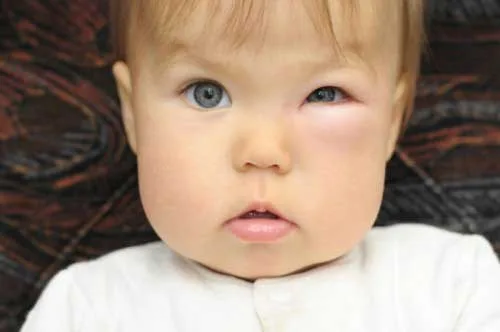
- Göz çz çif there is a redness in the environment or a yellow or greeny gösource;syllable current;
- If there's trouble breathing or wheezing,
- When you get permanent &olum;x<i>sq<i>sq;i>sq<i>sq;i>sk<i>sk<i>sk<i>Isk<i>I'm not sure if I'm going to be able to be able to do it.
- Birkaç g&huml;in the thick, green nostril current,
- If there are other symptoms or symptoms that worry you, such as the unusual or alarming crying or eating; you should contact your doctor.
Get medical attention for the baby below:
- If she refuses to breastfeed or accept fluids.
- Hard enough to throw up or change skin color if it's hard enough.
- Bloody mucus;x<i>If he's tired.
- If you breathe, if you can breathe.
- If there's any unusual d<i>stuff energy or sleep.
8 How Can You Protect the Baby From Coldness?
- The best defense against colds is often handwashing.
- Keep your baby away from everyone who's sick.
- If you have a newborn baby, the sick one is hiç do not let anyone visit.&n>
- Instead, seek public transportation with your newborn baby; from their mass and mass gö from the current.
- Wash your hands carefully and often with soap and water. If there is no water and soap, use at least 60% alcohol alcohol alcohol alcohol (supposed alcohol-based hand sanitizer) before you touch your baby. &n&n>B>B>K çdul:wash your children's hands &olum;olum;oluml>Iml>Esst your hands with your mouth;Yn&N&N>Don't touch your mouth with alcohol-based hand or your mouth; &n>Don't touch your mouth with your mouth; &olum;Y>Don't touch your mouth with your mouth;Y>Don't touch your mouth;
- Clean your baby's toys and pacifiers often. Swept the touched y&bsp;swept the food. &o<i>It is essential that one of your parents or your baby's playdates has a cold.
- öx<i>Sneeze or sneeze on everyone in the house. &n>Get rid of the used handkerchiefs and wash your hands very thoroughly.>If you can't reach your menu on time, &oluml;i>sneeze your elbows.</i>Then wash your hands.</i>If you can't reach your menu in time, then wash your hands. <i>