

How to Feed My Baby? Feeding Guide for Babies 6-12 Months Old
Introducing complementary foods is an important stage in a baby's growth and development. What should a 6-month-old baby eat? What should be considered in the feeding routine of 7-, 8-, and 9-12-month-old babies? Nutrition expert and dietitian Yesim Celik shares sample baby feeding menus and important tips for the transition to complementary foods.
Introducing complementary foods is an important stage in a baby's growth and development. The consistency, quantity, and variety of foods should be appropriately adjusted according to age and development. Each baby's nutritional needs and food preferences are different. Therefore, the following menus are examples. It is important to consider the recommendations of the doctor who is following your baby's development.
It is important not to rush when introducing complementary foods, but also not to delay introducing new foods excessively.
6-Month-Old Baby Feeding: How to Transition to Complementary Foods?
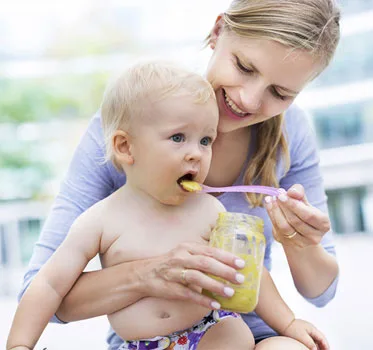
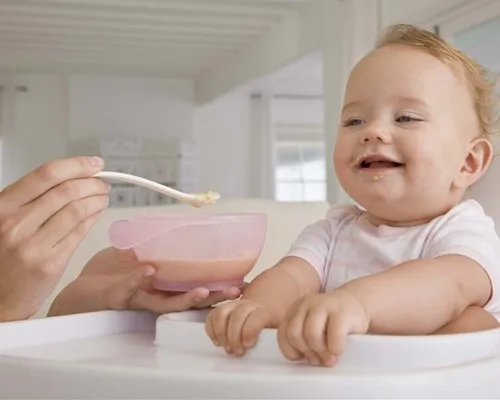
6 months is the starting point for transitioning to complementary foods for babies who are primarily fed with breast milk. At this age, babies start to move food towards their mouths with their tongues. The food should be prepared in a soft and mashed consistency.
When preparing fruit and vegetable purees, it is recommended to use a glass blender instead of a metal blender to prevent vitamin loss. It is important to avoid serving ready-made fruit and vegetable purees. It is important to present the food separately to allow the baby to get used to different tastes.
Sample daily feeding menu for a 6-month-old baby:
6-Month-Old Baby Feeding: Transition to Complementary Foods
- #Starting complementary foods for babies who are primarily fed with breast milk in the 6th month
The baby moves food towards their mouth with their tongue at 6 months. Start giving soft mashed food at this age. When preparing fruit and vegetable purees, it is important to use a glass blender instead of a metal blender to prevent vitamin loss. Ready-made fruit and vegetable purees should not be served. It is important to present the food separately to allow the baby to get used to different tastes.
- #Sample daily feeding menu for a 6-month-old baby:
08.00: Breast milk, 1/4 egg yolk, 1 teaspoon of honey, a little bread crumbs (can be mixed with breast milk or formula milk)
10.00: Fruit juice.
13.00: Vegetable puree or 1/2 cup of soup, 2-3 tablespoons of vegetable puree.
16.00: Yogurt and a small amount of fruit puree.
20.00: 100 cc of yogurt and 1 tablespoon of pasta (mashed).
23.00: Breast milk.
7-Month-Old Baby Feeding: Transition to Solid Foods
At 7 months, babies start to take solid foods. You will see them moving their tongue and gums.
- #Sample daily feeding menu for a 7-month-old baby:
08.00: Breast milk, 1 egg yolk, 1 teaspoon of honey, 1/2 cup of mashed cheese, a little bread crumbs (can be mixed with breast milk or formula milk)
10.00: 1 cup of fruit or fruit puree, 100 cc of yogurt.
13.00: 1/2 cup of soup and/or 2-3 tablespoons of vegetable puree, 1 grilled chicken (mashed or given to the baby)
16.00: 1 cup of yogurt and a small amount of fruit puree.
20.00: 100 cc of yogurt and 1 tablespoon of pasta (mashed).
23.00: Breast milk.
8-Month-Old Baby Feeding: Vegetable Purees and Meat Dishes
It is not recommended to add salt to baby food until they are 1 year old. Therefore, it is important to prepare their food without salt and spices. If you prepare the food yourself, you can give it to your baby without salt.
-
#Sample daily feeding menu for an 8-month-old baby:
08.00: Breast milk, 1 egg yolk, 1 teaspoon of honey, 1/2 cup of mashed cheese, a little bread crumbs (can be mixed with breast milk or formula milk)
10.00: 1 cup of fruit or fruit puree, 100 cc of yogurt.
13.00: 1/2 cup of soup and/or 2-3 tablespoons of vegetable puree, 1 grilled chicken (mashed or given to the baby)
16.00: 1 cup of yogurt and a small amount of fruit puree.
20.00: 100 cc of yogurt and 1 tablespoon of pasta (mashed).
23.00: Breast milk.
What to Pay Attention to When Transitioning to Complementary Foods?
- The consistency of the food should be appropriate for the baby's age and development.
- New foods should be introduced to the baby one at a time.
- The baby should not be forced to eat foods they don't like.
- It is important to avoid adding salt to baby food until they are 1 year old.
- The amount of complementary foods should be adjusted according to the baby's appetite and needs.
- The feeding routine should be based on the recommendations of the doctor who is following the baby's development.