Your baby As she grows older Intestiny and allergy decrease
Newborn and The intracranial process of breast-sustaining infants is a habit of digestive tracts. It stimulates the immune system of unsmelled proteins, so the infants that start extra food early are more allergic to many nutrients, especially cow milk and eggs. And the allergies are getting less and less.
The older the baby is and the more mature he is, the easier he can deal with problems that can be started with extra foods, the more important it is that each baby can be separate, their development, their nutritional needs, and their activities can be different.
Babies who start extra food early are exposed to more fat, diabetes, hypertension, and severe vascular rigor in their adult years.
Add What to Do When Foods Are Given Should you be careful?
The fact that the extra foods are not contaminated with germs should be noted for the well-cleaned equipment and equipment used to prepare and provide the food for the baby, such as bottles, bowls, and spoons.
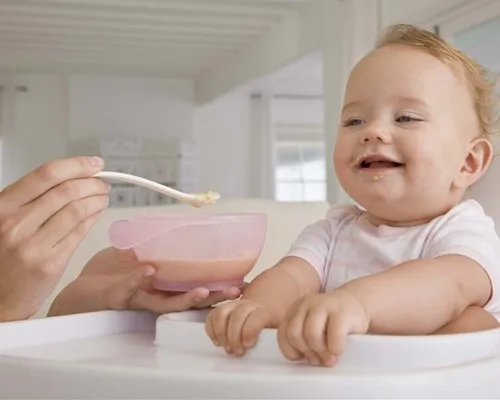
The cleanup of the bottles is harder than the dish and spoon, so the spooning of the extra food is important for both cleaning and preparing the baby for adult food, and it has negative effects on the development of teeth for long periods of time.
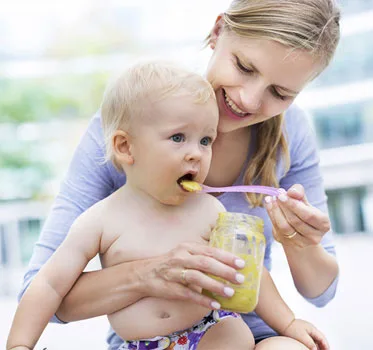
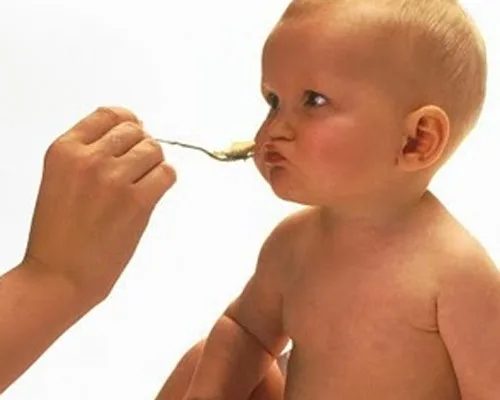
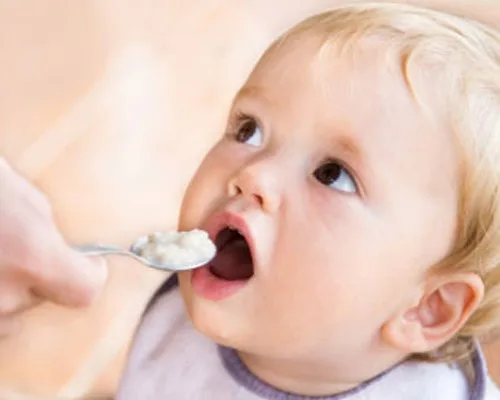
The four-month-old baby can't clean the food in the spoon, but a baby that has completed six months of its life can easily be fed by a spoon, and since the foods are supposed to be solid and semi-hard, it's not necessary to use a bottle.
When any additional food is started, the baby can reject it because it meets food for the first time. Therefore, the food must be given in small quantities first and then increased to feed the child in one meal. A few additional foods must not be started at once. Each time new food is started, it should be considered normal and not be alarmed.
The child should not be insisted on rejecting the new food, but after a few weeks or so, the same food must be retested, but if he does not want to buy it, it can be tried by mixing it with the food the child loves.
If breast milk is available, extra food should not be provided. This is important for the non-infected treatment of vitamins, minerals and immune substances in breast milk. If breast milk and supplements are given in the same meal, breast milk should be given first to prevent the production of milk from diminishing.
Foods should be served at the same time, if possible, but if not at the same time, then the condition of keeping clean should be consumed on the same day. Foods that will undermine the family budget when making additional food choices should be avoided. Cheap foods that can easily be found are often more useful than expensive ones. No more salt should be added to food prepared for children under one year of age.

Which one? What extension in the months Should food be given?
In many lands of the world, a significant portion of people who live in rural areas feed their babies to their own milk for up to six months. In the months following, they give to their young by chewing or crushing foods such as meat, liver, cheese, eggs, vegetables, fruits, and fruits. They continue to breastfeeding for a certain period and then they slowly cut their young from the breast (at the end of the second age).
Add Basic Food Properties
You know, the teeth usually start coming out from the sixth month, which means that we need to start slowly, slowly, solid food.
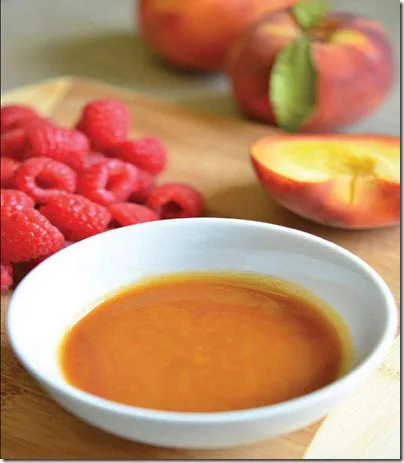
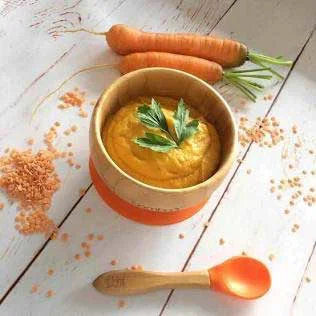
The main features of supplementary foods given to infants after 6 months are: semi-hard, non-allergenity, contenting with sufficient vitamins and minerals, cheapness. The main foods that fit this purpose are home yogurt, kefir, flour soup (mercimek, tarhana etc.), vegetables and fruit purées.
The iron tank that passes from mother to baby begins to run out from six months ago, and now the mother's milk is no longer enough for the iron baby in it, and if the baby is fed with cow milk, its lack of iron is increasing, so after six months, iron-rich supplements must be added to the diet.
The meat is a quality protein and a variety of sources of vitamins and minerals. The reason why its nutritional properties are superior is that the meat that is fed in the mera must be consumed if possible. The meat is added to the meat, then the meat, then the meat, then the meat, then the meat, then the meat, then the meat, is added to the vegetables (pure) as the child's age grows older and the meat is given in the form of meat meat meat meat meat meat.
Meat Iron Lack And Pre-Paper?
Half the world's population lacks iron, and in Turkey, it's about the same rate. Children between six months and two years old, the ratio is up to 70-80 percent. Yes, the best iron source is red meat, but some families' budget may not be good enough to buy enough meat. In cases such as peas, beans, lentils (when consumed with vitamin C), the ratio of iron is also close to the protein protein proteins.
And the irons that are not included are not well absorbed from the intestines because they are three-valued. The iron can be increased by vitamin C (the fresh fruits and vegetables) which are bought with foods. Grape syrup is not as good a source of iron as it is thought. It is also rich in sugar in the shelf, but if it is given a sweet food, it should be preferred to the village syrup.

But still, the lack of iron is so high that after 4-6 months each baby is given iron drops until the age of 1.
And the vitamin D that he needs to use, by the way, is also vitamin D, which is given to babies in a 400 to 10,000 units per day, which I prefer to be given 10 drops.
Some doctors say babies shouldn't be given liver-shaped incisions, whereas our grandmothers chew up the liver and put it in their mouth while feeding our mothers.
And they do it right, and there's a tradition here that has millions of years of history. The liver and brain are the most valuable parts of animal food. See, when the lion eats the prey, he eats the liver and then the other organs. If the hunt is large and the belly is full, the meat is left behind. Therefore, it's not right to ban the disability in the baby feeding. The fear of physicians is that the cripples are parasites to the people from the cripples, but it's not dangerous for them to lose the cripples of animals who were under vets.
To babies At breakfast What Can Be Given?
For example, you can give eggs; it's a high-end protein source, and three weeks after an egg comes out, a chick is coming out, so there's all kinds of building materials inside the egg that can create a living being, so doctors who say that more than one egg a week is harmful to their patients are essentially harmful to their patients.
A full-seminated egg can be given to a baby from the sixth month (one, two a day). If an allergy develops, only egg yolks are given to the egg and the egg is started after the age of 1 when the chance of an allergy is reduced. The rafadan egg is better than an egg. The village egg should be preferred (or the chicken's eggs are free to go!)
Full cheese and olives can be given at breakfast or other meals by crushed.
Cow Milk Harmful?
Milk is the most important cause of allergies around the world, and milk allergy is over 10%, and cow milk use can also cause vitamin C and iron deficiency.
Despite all these problems, cow milk can be used in the case of supplementing iron and vitamin C (mour and mashed) because of the poor diet problem common in developing countries.
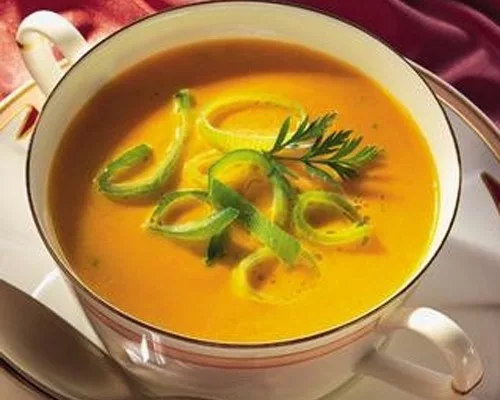
Vegetable Soup for Babies How Should It Be?
Child feeders want to be consumed by the semi-hard vegetable mashed soup, not vegetable soup, because it's liquid, but it can be given in the form of soup until the baby gets used to it.
For example, a teaspoon of butter or olive oil, 1 medium-sized carrot, 1 medium-sized potato three coffee cups, water and a pinch of salt (if possible sea or pickles are made of rock salt) are cooked into a pot. Then, the juice of the soup is filtered into a dish without any processing. The soup is boiled into its water for another five minutes. If the baby is accustomed to soup water, it begins to be given carrots and potatoes with mashed rice. After the child is used to mashed potatoes, the soup is added to the sauce.
The spicy tarhana is a traditional food that is cheap and food-rich. Mercimek is a rich copper beaner, so it would be a good choice for babies to have soup, while the food cooked at home can also be given to babies. For example, it's stuffed with pumpkins: it's crushed into babies.
Meanwhile, some physicians want to avoid putting oil in the supplements of milk children, which is very wrong, because the baby growing fast needs oil very much, and oil is oil, and solid fat.
_ What Should Be Noticed in Feeding?
From the ninth month, babies now have a few teeth to chew solid foods. During this period, cooking can be started at home. The baby is not used to normal food and is not burdened by family budgets. During this period, breast milk can be cut slowly. But it is best to continue breast milk by getting enough extra food, if necessary to continue by two years.
One of the problems that is common in a child of this age is that they only eat juicy food, which can sometimes go on until they are two or three years old, causing large amounts of degeneration, severe eating, tooth growth, and deformation.
Babies after one year of age How should he feed?
Children who are one year old eat three meals with their families as a rule, and when asked for, they can be served foods such as yogurt, kefir, cheese, and fruit in the morning and afternoons.
High sugar content for milk children (source, biscuits, flour, starch, cake, sugar, syrup, honey, soda, soda, juices) causes insulin resistance to be early, so sugar, flour, starch, and foods made from them need to be cut down a lot.
♪ The spoon food is ready ♪ Is he healthy?
None of this is better than the vegetables that the mothers make in their homes, which I don't think is half worth, one was prepared that day, the other was a few months ago, and they say it's perfectly natural for the contents, but somehow these foods can stay on the shelves for months without decomposing.
Mama companies give the media such a publicity stunt that you think they're miraculous foods that mothers feel guilty about seeing these commercials, hearing them, not using them.