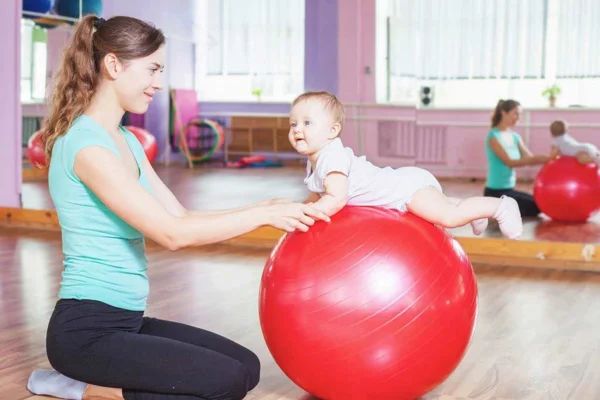


Baby Gymnastics: Key Points
In your baby's rapid development, you may unconsciously focus on a topic: posture. This is an important topic for your child's physical and mental development, as well as for their posture health. Sports are very important.
So, what should you pay attention to when doing gymnastics for your baby, and what exercises should you do? Here are the important recommendations from experts.
Exercises are very important for the physical and physiological development of babies, especially between 2 and 6 months. This allows the mother to relax and feel good while exercising with her baby, especially working mothers can find time to do it.
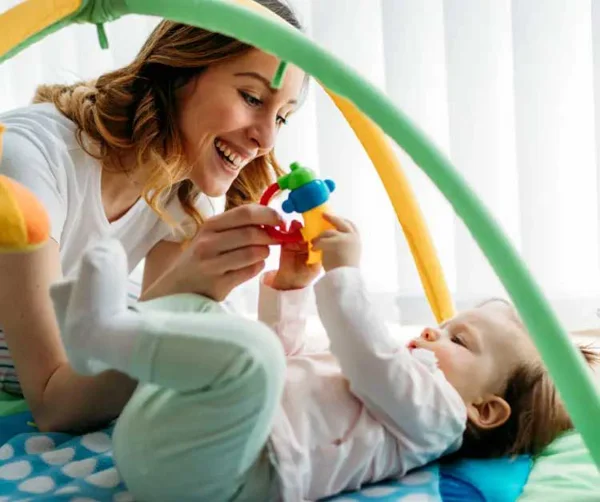
When the mother interacts with her baby, it helps her to better understand her baby's body and learn about it.
Key Points of Baby Gymnastics
It is very important to set aside 5-10 minutes each day for gymnastics. It can be done 4-5 times a day.
Exercises done before bathing and before sleep help the baby to sleep well.
The surface where gymnastics is done should be a clean and smooth surface, such as a towel or blanket.
It is very important for the baby to be naked or wearing a comfortable outfit (such as a onesie) during gymnastics.
The room temperature should be set appropriately; a temperature of 22 to 24 degrees is sufficient.
The exercise program should start with heavy and challenging movements that will tire the baby and work all the muscles and joints in the body.
After about two weeks, you can continue with light movements, gradually working the muscles and joints.
It is ideal to do the exercises when the mother is relaxed and calm, accompanied by soft music.
How to Do Gymnastics for My Baby?
Have your baby lie on their back and hold their head with your hands. At the same time, hold your own fingers to grasp your baby's wrists. You can start with this movement. If the arms do not move in coordination, this movement may be difficult.
Have your baby lie on their tummy and hold their head with your fingers. You can start with a small movement. After that, you can help your baby move their muscles and head according to their own movements. Babies typically start to control their heads from 2 to 3 months. By applying these exercises, you can also detect any possible delays in their nervous system development.
How to Exercise Your Baby's Muscles and Joints?
Gently grasp your baby's hand and wrist and cross their arms, one to the left and one to the right. This helps to develop their coordination and balance.
For babies, you can do the "parachute reflex" exercise, where you move each arm to the side and up, then repeat in the opposite direction.
In the first 6 months, the most important thing for babies is to develop their leg and neck muscles, which will help them stand, sit, and hold their head. To do this, you can gently stretch their legs towards their stomach. This movement can be repeated 5-10 times.
Another exercise is to move one leg at a time, either pushing one leg towards the stomach or stretching the other. This exercise can also be done 4-5 times a day.
By 5 months, babies can start sitting with support. However, this can also happen earlier, around 6 months.
Generally, babies who are regularly exercised can start sitting without support by 6-7 months. It is ideal to do the exercises when the mother is relaxed and calm, accompanied by soft music.
What are the Benefits of Gymnastics for My Baby?
1- For the development of the musculoskeletal system
2- To develop coordination and balance
3- To get used to sports and enjoy it
4- To become strong and resistant to injuries
5- To get to know themselves and develop a sense of trust
6- To gain courage.