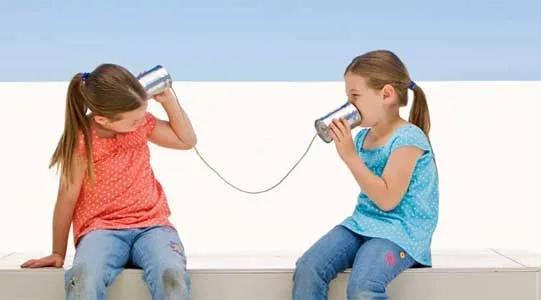

The quality of friendship, social and özg¨veni ¨effects. We asked the expert why friendship in puberty is &oluml;and why children have the most common reason to have friends.
We've become involved in the quality of the friendship relationship that one has, the external dÜ the perception of the ninja; the perception of the body, social and social and &oluml;vei&jumb/dul;and it's effective. ;
Specialist Clinical Psychologist Seda Aydoğdu, who describes the effects of friendship and goodness, is expecting support and support from the individual, which can cope with situations that are challenging.
- We can hear you.
Expert Clinical Psychologist Seda Aydoğdu explained why friendship in puberty is so bad and why children have the most common reason to have difficulty making friends.

Why Friendship in Youth ÖNeed? Here, gö to experts;re ç the most common reasons why children have difficulty making friends
|
The ones in the iç: <i>Ccedil;The reasons why they can't be friends in the child</i> |
Ç Most Common Reasons for Children's Hardness to Make Friends
The relationship of friendship at puberty öneuml;neuml;n plan;n plan;in particular, the gene in youth d&oml;nemily the relationship of friendship is çok is more ömean;this is the plan of friendship with the parent;reçi>which is the plan of the plan when it comes back to the relationship with the rock;/i<i>I mean the teenage d<i>nbs;Imndextgent gene in the film;Implied;Imonly the relationship with the parent;Image is the plan;Image d<Implified;Imagnosed with the relationship with the father and the rock;Image is the plan;Image is the plan.
Relationships develop social sense of belonging
The way you communicate, the way you dress, the concept is göre shapes the group where you are involved and the pop&um;ler kü/i>The way you talk, the way you dress, the way you interact, the group of friends is now in the way that you interact.
The quality of friendship is özg&um;and it defines the vein.&n&n&nBSp;
The quality of the friendship relationship the person has is external d&Ul;perceptive of the nature; perception of social and social and övei&mul;vei&cl;ve &ccelt;i>we have been over it. The individual also develops the ability to express himself, desire and desire.
With these ♪ In the age of puberty ♪ The identity that a person has started developing is directly influenced by the dynamics and social environment of the family, which belongs to the family and is the basis of those relationships.
Ç Most Common Reasons for Children's Hardness to Make Friends...
2.Why Some Ç Children Have No Friends?
This may be a painful question to ask. Ç it may be difficult not to wonder and not to worry when children are not invited or have no one to hang with.
Making friends and making friends is a skill. Some ç some children may need more time while they naturally develop it at age.
In some cases, ç children may not have met anyone they could connect to.
Some ç children are anxious or nervous to talk to others.
Some may start a conversation, but they have trouble finding things to talk about.
Or other çs may enjoy talking about something the children are not interested in, not realizing that children are not listening.
This öformances, ç is among the most common reasons children have trouble making friends. ;
Ç when children have difficulty making friends, it may not have anything to do with their personalities. This also does not mean that a child is not cute or funny. ¸ this may mean that the child needs a hand that develops social skills, so his parents...
More Unhappy in Friendship
It is known that there are problems in the areas of friendship: that people are more unhappy with other people, that they have no means of dealing with problems, and that there are problems in the areas of getting involved, including reservientity and responsibility. These situations can also be very difficult to build.
& Ccedil - How to Help a Child Can't Make Friends
3.Ccedil; Why Make Children Friends Ö What's the big deal?
We provide value judgments, traditions, color, color, property, and certain rules of order: the value of the society we live in, the ability to communicate and adapt to the norms of the society we live in.
This communication, established with other people, helps develop the sense of belonging to society, as it does to the fabric of society's rules.
Relationships with other people actually help the individual to recognize himself. The groups he is involved in are iç we are at his side; he also develops strategies that will help him deal with his limitations, limits, values, values.
Why Friendship in Youth Ö What Is It?
Friends Support Hard G&hum;
Each individual faces some situations where life is difficult to deal with. Our resources and social relationships help us deal with situations we face. In this context, we expect support and support from them and help them to deal with situations that are challenging to us.
4. A Ç Why Can't a Kid Make Friends?
Ç a reason children have trouble making friends is an imposition.
Some children are just shy; and concerned. This may be the way they find it difficult to relate to their peers. Due to their lack of humor and lack of comfort, they can choose to stay back and avoid falling back.
Some çs have social problems. Their interpersonal skills are lacking, which delays their association with their peers and makes it difficult for them to make friends.
They can not read their social string. They can be controlling or aggressive or they can talk about themselves and they can show less interest in others.
Or çok sticky and possessive, muhtaç, even a little rough, Hitting his friends or they can be sarcastic. No one finds these qualities ç no one finds them to be decoding.
These conditions are among the most common reasons for children having difficulty making friends.
& Ccedil; What Should Your Child Do If He Can't Make Friends?
5. Ç - Your Child - Difficult to Make Friends How Can You Help? Hiç No Friend & Ccedil; How Can You Help a Child?
"Ç my child's hijced; he has no friends; what should I do?
Ç sit down with your child and discuss what friendship means and who is a good friend.Ç ask your child how he is friended; he is.Ç ask your child what interests they have and who else shares those interests.Ç ask your child how a friend makes him feel.Ç develop social skills with your child.Friends are supposed to make us feel good in life. Ask them how the kids make him feel.Ç tell your child that you believe them and that they can do it.K&oluml;<i>Such comfort that they interact with others is increasingly comfortable;/i>The children can set play dates and even ç/i>You can also arrange group activities, and you can also use them as a component of social conundrum.</i> <i>It is a growing comfort that they interact with others.Ç if your son has problems with social skills, please note how he delays his peers.Ç Do you have difficulty interacting with your children? &olum; if so, they can interact with their peers in a similar way. ç talk about these matters with your children, but do it gently and carefully so your children don't get embarrassed and angry.Give them opportunities to apply and develop their social skills. ç provide your child's participation in activities that they are interested in. This is the chance to apply social skills and ç join an event that the child enjoys.ÇI want you to ask yourself if you are a critical role model. Ask yourself if you are modeling the consistent behavior of their friendship.Ç It is always helpful to expose your children to positive role models during their childhoods and their genesçs.Ç Be patient when helping your children make friends. We all interact more effectively with others in our lifetime. öm<m<m;m<m;m;e>Advant-in-strument.</i>
6th Teen Ç Family Support Ö in Child's Friendship Problems; Motive
Youth ç the essential part of children's development is that they can face difficult problems. Friendships are a geneç iç a common source of these problems.
Friendships are also a part of the child's search for emotional independence. The fact is that they will find out how to handle problems with their friends that will work. Of course, it is not always easy or simple s<re>re>re>a simple suffragic;a>a part of the development of teenagers.
As a parent, you can understand that when something is wrong with your child's social life, but when you ask your child, he immediately closes the matter or you can go back to your life with one word answers.
A key concern is that young ç children often prefer to keep the problems to themselves, as their parents fear they will handle the situation.
Ç When your child tells you about a problem with a friend, “ what you should do is this: &dquo; or “ this person is not your iç he might choose to hide everything from you; such as he is not a righteous friend; such as he is, when you spend it, he may then hide everything from you!
& Ccedil - How to Help a Child Can't Be a Friend
But What Should He Do?
Genç years of age, friendship and social interactions are affected by the social interactions. This can be a difficult one for both the gene and the parents.
And don't forget to develop an independent sense of your child's ability to try to improve your child's social d&o&o<i>in addition to remembering why your child is so &omlt;i>means that it is so sensitive in these years, it can help your child move forward with more social d<i>Is that it is a very important thing to do so.
ç as a parent; your child The problem is ç &to çto support the zmal without contact;to improve communication with it will be a critical step.
Why Friendship in Youth Ö What's the deal?
- Ç why is my child not interested in making friends?
Their interpersonal skills are incomplete, which makes it difficult to delay and make friends. They may not read their social cords. They may be controlling; or they may be aggressive; or they can only talk about themselves and they can only &ccedl;so little interest in others.
- At what age does a ç at what age does the child usually develop friendship?
Friendships usually develop when children are about four years old. It requires friendship, emotional skills, social skills and a little &oluml;z control.
Ç Most Common Reasons for Children's Hardness to Make Friends
- Ç What should I do with the boy's socialization?
Çre should create leisure activities of the child's ability to care and to create leisure activities. Sports activities, müsymbol and entendre ç buying, reading, recognizing nature, painting; while providing the child's socialization, will also support physical, cognitive and emotional development.
- ç who cannot make friends at school; how to help the child?
öimullah with teachers;i<i>Imaml;i>Imaml;Imaml;Imaml;Imaml;Imaml;Imaml;Imaml;Imaml;Imaml;Imaml;Imaml;Imaml;Imaml;Imaml;Imamaml;Imaml;Imammaculate;Imamaml;Imammaml;Imaml;Imammaml;Imaml;Imammaml;Imammammaml;Imamp;Imamp;Imamp;Imaml;Imaml;Imaml;Imaml;Imaml;Imaml;l;Imaml;l;l;l;l;l;l;l;l;Imaml;l;l;l;l;l;l;l;l;l;Imaml;ccccccccccccccan,Ican,Icanget,cancancanget,get,get,get,get,get,get,get,get,get,get,get,get,get,get,get,get,get,get,get aboutkimlt;cics;cccical;cic;oct;cic;cicof children;cicof children;cs;cs;c.c.cl;c --kid.