
How Social Fobi Affects School Success in Teens - The Symptoms That Need Attention
The adolescent dönemple çcan increase their anxiety about how children are judged by their friends. However, fear of humiliation, ridicule, exclusion, or error can come to social phobia when they start to influence their life and school life in a serious way.
Ç Child and Teen Psychiatry Uz. Dr. Human Can Elmi is not only concerned about social relations in teenagers, but about school success and ç the boy's ability to fulfill his responsibilities. ç notice that he can also negatively affect his ability to fulfill his responsibilities.
- What is a teen social phobia?
Social phobia is a state that can manifest itself when one has intense anxiety in social environments where one is judged by others.
ÖEspecially puberty dönemily contacting new classmates, talking to new people, speaking to the community öand performing in the process can cause intense anxiety.
In the mind of a teenager who's got social anxiety;
- I'll be humiliated.
- “everyone will make fun of me.&dquo;
- “I'll be funny.<i>
- “No one wants to be friends with me.&dquo;
- “Everyone will think I failed.<i>
like d<i>Stuff;i>The fun can be made.
When the events are concentrated, ç the child can start to avoid what he wants to do or should do.
- What are the symptoms of social phobia?
In adolescents with social phobia, not only behavioral but physical symptoms, but also physical symptoms can be found.
ç also son;
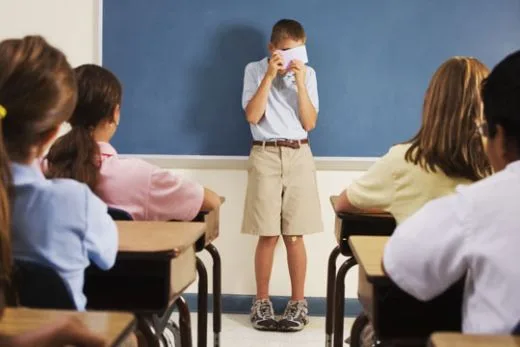
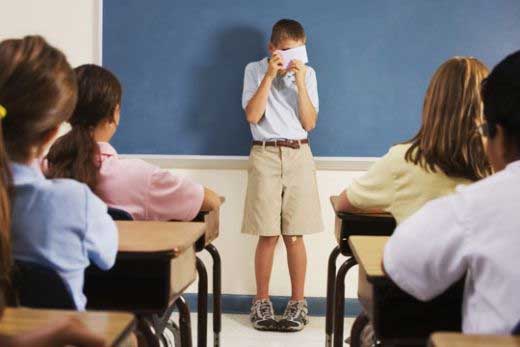
- In class, you can avoid taking a sö
- ç to the board; may not want to break.
- ç can be found from presentation.
- He may have trouble talking to new people.
- He can avoid joining the group of friends.
- He may experience intense stress in exams or performance situations.
- The i> of which he fears to make a mistake may not participate in certain activities.
The expert assessment of this behavior is &o<i>if it gains continuity and çi>if it affects the child's school or social life in my body, &oluml;i>it carries a lot of information.
- Does social phobia affect school success?
Social anxiety can affect school life. A social phobia;a liar can be avoided from answering, standing or presenting in class, even though he knows it. &Oml;He may find it difficult to communicate with his teacher or join his group ç
These exclusions may cause timely reductions in attendance, academic performance, and avoid school.
Social anxiety should therefore not be considered as “its statusçness”
- What's the difference between shyness and social phobia?
Not every shyness; ç the boy does not experience social phobia.
Embarrassmentç in some social environments, it can be a natural personality that can be broken; in social phobia, anxiety is more intense and more frequent; in school, friendship or g&huml; in a particular form, it can affect one's life.
&Oml;Especially çS&S&S&S&S&S&Second social environments;The child is constantly absent;he does not want to attend school events or is unable to fulfill his responsibilities due to his anxiety.
- Why is it a teen's social phobia?
The problem of social phobia can be multiple factors in the emergence of social phobia. The presence of similar anxiety problems in the family, ç the child's upbringing is a part of which the social experience can be assessed.
We are. Dr. Human Can Elmi, öespecially extreme m&suppression;except that parenting attitudes, çperformance criticism and the absence of expectations can increase the change in the size of the child.
The message that the child is not successful enough to continue to take advantage of him in social situations may negatively affect his ability to evaluate himself.
- Can experiences trigger social phobia?
Ç some negative experiences in the boy's school life can also raise social anxiety.
The fact that the teacher çs his classmates yell at him on the child can become a negative experience depending on his personal &employability.
This türevests life, and the boy may be afraid of a similar situation again and may start to avoid social environments.
- How should a teenager with a social phobia be treated?
The child's Göre çre &cl;uuml;re;supporting the child's life ömeans. çsupposed to not be used to the population's constant success pressure.
Parents:
- Ç to determine their expectations in a way that is equal to
- Excessive m&mulmity; perfection& escape from attitudes;
- Ç child ç notice and support the primer,
- He helped her move forward in the steps of the universe,
- “I'll be humiliated; or “I won't be able to do it; like d<quo;<i>I'll be humiliated;i>I'll be humiliated;i>I'll be humiliated;i>I'll be humiliated;i'll be humiliated;i>I'll be miserable;i>i>I won't be able to <i>I won't be able to do it;i>I'll be able to do it;i>i>I'll be miserable;i>I'll be miserable;i>I'll be miserable;i'll be miserable;i>i<I'll be miserable;i>I'll be miserable;i'll be ashamed
- Ç not comparing the child to his friends or peers
ömembarrassing.
- ç, a social phobia; should the child be taken to the board?
Ç an impregnable attempt to reduce the boy's social anxiety may not be the right approach to force him to be involved in the task of forcing him to be involved in a ç situation that he is otherwise concerned with, or is forced to present himself to the throne.
Instead, it may be more appropriate to support the child's participation in social environments and help in the need.
- ç, a parent's social phobia; compare their children to other çs; children?
No. “Look,your friend can do this,why can't you do this?&dquo; comparings like this, ç it can make the boy feel inadequate.
Ç Following the boy's own development and supporting his progress may be a more constructive approach to social anxiety;cadele s¨result.
- When should social phobia be supported by the expert?
Social anxiety ç the child's ability to go to school, attend classes, take exams, form friendships, or form friends, or to develop a clear sense of responsibility; and if it is beginning to affect my own, professional support is &oluml; and so is the need to be given.
Uz. Dr. Human Can Elmi is a key student of social phobia and social welfare; without affecting my social life, önoting the value of the evaluation &oluml;not the focus çexpects the value of social phobia.
Parents ç Child's anxiety; child's concern is expected to listen to him instead of thinking, support without pressure and help without pressure; in case ç son and adolescent are seeking an expert in mental health &ccellal; is required.