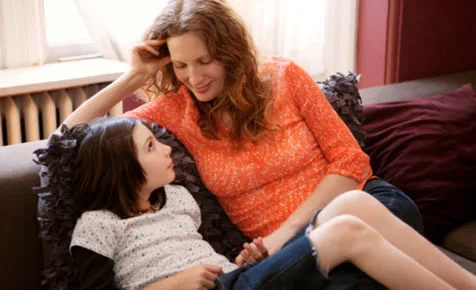
Touching people we love has an undeniable emotional power, and parents have little children or babies. To embrace them, to hold them Or they caress them and kiss them because of the emotional interaction that physical contact creates.
For example, hugging a young man in front of his friends can cause shame in him rather than love, even pushing his parents and stopping him, but to massage your daughter or your son's shoulders when he returns from a exhausting game. You can convey deep emotional love to your child. It always bothers the young, but it's always accepted as a true parent's love to hug your child after a bad day at home from school.
Teenage children are different. You can't keep touching them the way you touch them, the same places and the same way. What parents need to remember is independence and self-inflictedness, which is the main issues of the adolescent. Parents have to ask themselves these questions:
Is my physical contact with him a penny that undermines the independence of my teenage child, or does this positive influence on the concept of self-inflictedness of my teenage child?
Your adolescent child needs to feel your love, and physical contact is one of the five basic languages of love, but you need to know how to speak the language of physical contact at the right time, in the right place, in the right place, in the right way.

Smart parents try to discover their children, and eventually they learn from the movement of teenage children to understand the state of their mood.
Teens tell us their moods in their body language, for example, the distance they stand when they talk to you or the way their hands stand, their arms stand.
Wise parents can observe this body language very well and learn the right time to touch teenage children. It is not necessary to understand why they are now touching me. The important thing is to recognize and respect his mood.
If the memorandum of love your adolescent child uses in childhood is physical contact, it will not change in her adolescence, but if you want your child to feel loved, you must change the dialect you use when you speak it.