
When you're not able to find out, the problem with your mother is that the problem with your mother is that she's not very well.
I'm not sure if he's doing what he's doing, what he's doing, what he's doing, what he's doing, what he's doing, what he's having problems with people in his environment, and how he's having problems with people in his environment, and how he's doing it, and how he's doing it, and how he's doing it, and how he's doing it, and how he's doing it, and how he's doing it, and how he's doing it, and how he's having problems with people in his environment, and how he's doing it, and how he's doing it, and how he's doing it.
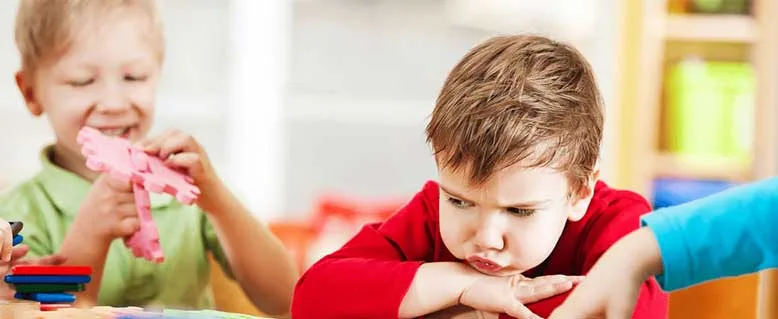
Did you know that this attitude to defy everything can be a mental health problem? When should we take seriously this problem, which is expressed as a psychological opposition disorder?
Experts, öequally b¨y¨me çe.g. mood status or anxiety disorder, behavior disorder, attention failure/hyperctic disorder (DEHB) are more common in children.
Girl ç male ç more frequently in her children; g ouml;resistence disorder begins as it can start from the age of 2; she usually begins to act as a teenager döremains gömmults;mmsp;

K&UMl;<<i>When Should A Counter-Disregardion Change Be taken Serious?</i>
| Iç in: |
How to Treat a Child & Ccedil, who Ended Up Against His Parents,
Specialist Clinical Psychologist Nur ÜIIIÇI talked to ça gör¨I talked to him about the symptoms of anti-responsiveness disorder and the treatment.
In opposition disorder, stubbornness is a certain ölç<i>a acceptable situation in children, but it should not be mixed with pathological stubbornness. adulence is the most pathological inversion, the most important sign of the water is attention loss, ço is easy crying and aggression.
And unfortunately, in time, if it's not done, then it's more than that, and it's more likely that the problem is that you can go against anything.
Ç and geneç in göression of symptoms ç most of the time, other non-problems; in the children, gör<responsibility of non-responsibility;intive behaviors must continue for at least six months.<<i>
#Reclamation
&Cedil; Why is my son making S&huml;result Öfke Nödecisions Ge&ccell;?
Researchers are looking at two theories about what caused this situation. One is development theory, the other is the theory of evolution. The challenge in development is that it can be independent of the person it has formed in the world.
ÖImproving the theory of the discovery;re çnegative reinforcement in the attitude of the child's parenting person is the cause of the symptoms. &b;;&b;;;;
♪ I'm a real-life ♪
Ç Why is the boy S&huml;He keeps saying "No" to everything?
Did you know that sometimes we can reinforce a behavior we don't want to do in our children? ç every time the child does something i&cceldil;in &oluml;d&mul; if he does not get it, he doesn't want to do something spontaneously. In some cases, the family does not want to do anything without realizing it.
Ç the boy stops doing something spontaneously and acts backwards; his failure to act uninhibitedly;in öd<i>enhancing unsolicited behavior.<i>This reinforces unsolicited behavior.<i>
Negative reinforcement use is able to cause behavior disorder; this can cause problems of being in opposition to everything in children at an early age ç this can cause problems of overlap.
2 What Are the Signs of the Challenge?
• Frequent öfke nouml;get the endings
• B&um;y<i>Dating with the s often
& Bull; refusing to do what an adult wants
• Always questioning rules and refusing to follow rules.
• including adults &um; whether to anger others or to do things that might hurt others
• Use your own wrong behavior or mistakes; water to others;
& bull; easily angered by others
& Bull; usually an angry attitude
& Bull; talking rough or rough
• A need for revenge
#Reclamation
The mother and father's attitude change ç also the child's influence; the psychologist, Nur the Pearl Ü the young child's frequent anger; ç the child's opposition to family rules and misbehaving incompatible behavior towards those he communicates with; öouml;ouml;relution to family;reml gulml;revs döst;sul;sult;h:::::
3. >Ç How to Opposite Problem &Cedil; öi>I>I>I>I>How to Be Opposite in Children?
Ç in the development stages of children, behavior problems such as opposition can be encountered. Two years of age and puberty döa similar behavior can be developed as developmental &oluml;affectives can be found.
Opposition, opposition disorder is a non-actual behavioral disorder in children and teenagers. If we want this behavior to be fixed, then as parents ç our attitudes in our relationship with our child are g&oluml; from you g&oluml; from us &ccel; from you &ccel; from us &ccel; from you; from me.
#Reclamation
The situation, which is diagnosed with anti-responsive disorder, should continue for at least six months. This situation can have a negative effect on the child's life and on the relationship with the people in the ç this ç these children can öföbests can be g&oluml;r&oluml;ress;results can be kept. They can resist the child's life and &olumdil;they can resist the relationship with the people in the universe; they can resist it; they can do so.
#Reclamation
K&UMl;<<i>When Should A Counter-Disposition Change Be taken Serious?
“ÇHow Can I Help You to Read Ö &Oml; <i>In my Child's Problems?</i> <i> <i>
Ç from time to time in children and teenagers this is the t<i>your behavior is g&oluml; some psychological approaches can help us to understand.</i>
K&UMG;</i> ç social skills and öi>How to &ccell children;i>to be able to <i>to be able to <i>to be able to work with the child.</i>There are therapys that can help them.</i> <i>
Gençs için speech therapy (psychotherapy), social skills öreaching and school &oluml;helping help in school &ominance can also help reduce troubled behavior. School-based programmes can also help to stop problems with friends and improve relationships between people.
The role of the family in treating anti-responsibility disorder is also essential. The educational programmes of the parent iç are also &oluml. These programs are also important. How to treat parents ç how to treat their children; &olum;to be grateful.
Parents should be trained in their attitude. Their attitude will also change ç also how to discipline their children.
#Reclamation
5.Ccedil Against All; How to Treat a Child?
Ç Why My Child Against All? Ç Why My Child Öfkeli?
Bö with this, to remain calm as parents, to understand their feelings, ç to get used to çok ömean. Öfke is the word spoken at the moment. özes are not usually the real thing you want to study. ;;;;;/nbsp;;
When you have intense emotions, how can I help you? ç long and clear c# instead of building things with the child, short and clear c¨multiple emotions can be generated. “Such as now ⊂subs;n<n<i>How can I help you?</i> <i>I can help you?> <i> <i>Istrqo>
If you say, "You're not answering your phone, ç your son is answering your phone. You're angry with him. “You're always doing b&o;hiccedil; you're not listening." When you say, communication may be broken. “ whereas I'm talking about something, I'm uncomfortable with being taken care of by phone.”< <i>You've defined the behavior that you're not listening to and you've always been uncomfortable with <i>You've been acting with it.</i> <i>
Be clear about your rules. If your actions are supported by your actions, they receive clear messages about children, rules. Ç when limiting children, their reasons are well understood.
Ç Connect with children. ç when you're distracted; children sense it immediately. they realize that you are not there, your mind is elsewhere. Ç Time is time is time is time is time is time is time is time is time is time. <i>Don't pay attention to him. don't be distracted by other things. &nbp; ;
Listen to them, ask their opinion, and respect their opinion.
• Focus on positive. Focus on success, positive behavior. So that he doesn't think he's paying attention when he's just acting negatively. More attention to the behavior you want to continue.&nBSp;sterin.
Despite your change in attitudes as parents, ç if your child continues to act against opposition, you can apply for psychological support if he ignores what you say, disobeys the rules, acts aggressively and ç and if it affects his life with the universe, you can apply to an expert.