

Türkiyeye’de &huml;de ç çgör&um;Iml;Immediately received the spiritual problem &oluml;Immediately affected the future and the future of the maker. Nöropsikiatrist Professor. Dr. Nevzat Tarhan family had an emergency &ccel;im/olumdil;im/ccel;i&ccem/dil;Iml<Im/i<Im/i>Iml<Im/i>Imbss_i<I>I>Im;Imst/i>Implied the future of the teacher &c/i<Im/i>Im/i>Im;Ims &ctr_i<Im_i<Im_i<Ims &ct/i<Im/i>Im_i>The future of the future of the future of the future of the teacher Dr. &ct/i&ct/i>Im/i>I>The Creator &ct/i>The problem of the teacher &ct/i<The Creator &ct/i<Im;S of the teacher &ct/i<I<I<I>The future of the teacher.S of the teacher.St/i>S of the teacher of the teacher of the teacher of the teacher &cHD..
Is it Naughty or Attention Lack?
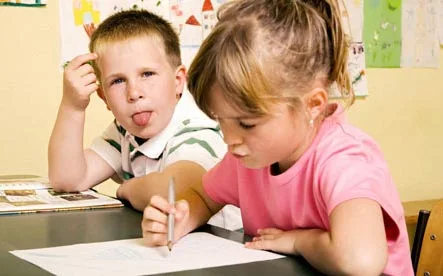
Ç parents whose child is hyperactive are accedilating; gö&r&release of schools. Örelaxion of attention and hyperactiveness in the manufacturer are negative not only for their studies but also for socialization. A group of families ‘can't ç as they say;Gouml;Gouml;remp;resss;starting their children's start school. ;
However, the hyperactive and attention disorder should be avoided; not removed from the emergency ömean;membsp;Prof. Dr. Nevzat Tarhan gave vital information about symptoms, patterns and treatment.
Attention Ancient Hyperactive Disorder Kaç Starting at age?
Ç some symptoms that cause ADHD ADHD ADD in children should have been displayed at age seven.
Üç different DEHB symptoms category:
1. Inattention,
2nd Hyperactive,
Reaction 3 (impulsivite)
Ç child-tightening school ç carelessness may not be noticed until you enter the environment. The symptoms are:
• moving when sitting.
• S&huml;result to get up and go around or run.
• Running or climbing at inappropriate times. (Genç in order to be unable to stand in this place)
• do not have trouble playing quietly or dealing with silent leisure activities.
& Bull; always ready to go.
• Ç overtalking most of the time. Hard to participate in group activities ç to feed.
• Reactionality (impulse) symptoms first begin with impatientness, difficulty delaying reactions.
• answer without completion.
• waiting for someone else to finish their order is ç bread.
• preventing or interfering with others in a way that causes problems in social or school.
& Bull; start talking at inappropriate times.
Ö Must Be Received Without Caused Risky Conditions;
Impulsive s&UMl;can cause accidents like çastrophic accidents. ç, which is DEHB;they can deal with dangerous activities without knowing. &Oum;Rindin can climb to risky places. &Oml;Rencedil;Dl:
DEHB’li ç children prevent them from performing their normal functions when they visit their home and school and friends. Ç children are diagnosed with at least six months of diagnosis of these symptoms when they perform some or all of them in at least two environments.

But with the poor treatment, at school, to be happy in social environment.
The DEHB treatment helps to control symptoms of hyperactive, hyperactive and impulsive. With stable treatment, one performs better in school, in work and social situations.
The DEHB treatment is çok yöd¨d<r, to/&cced;treat or behavioral modification therapy;or both i&ccedl;de/e/DHB treatments are both çor child/child/child should meet both family's and family's needs.
Research proves that treatment is safe and effective, other than other and more effective, and behavior therapy. These treatments only do more than reduce symptoms of DEHB.
Ç also creates the child to follow rules, develop relationships with his peers and family. There are two effective treatment strategies that are effective to him in the primary school &oamp;means &multi;mult;results;r&r&m;r&m;;
One is the treatment program under close surveillance. The other is the treatment program. The treatment is the intensive behavior therapy with treatment. In a comprehensive study, 10 ç nine of the other are seriously improving with one of these two treatment strategies.
DEHB’li ç children and teenagers iç the most effective treatment approach is multidisipliner approach. This approach is the best ç the most powerful elements are ç the most supportive and supporting of each other.