

|
5 Discipline Principle | ||||
Remember these five principles of discipline
1) Determination: A long discussion You want to give him the motive for the behavior you want before you go in, and wait for him to do what you want.
How do you apply discipline?
1. To set a good example for your child: Children do what they're told more than what they're told.
2. Rewarding positive behavior: The reward strengthens the behavior; it increases the possibility of repeating in the future. When given, it increases its efficiency. Reward the child who is being asked to act in order to be effective. The most effective rewards are social rewards. The reward is more effective if it is directed to behavior rather than to children.
But How Should I Reward My Child?
Social Awards: smile, wink, hug, well done, praise, etc.
Awards for activities involving rights: walking with the father in the park, watching a TV movie that the child likes but is late, playing with the family, etc.
Financial prizes: ice cream, balloons, toys, etc.
Do Not Reward Bad Behavior!
Turn your head and avoid eye contact with him.
Make it look like you're dealing with something else, or you leave the room, and you don't have to go into a verbal dialogue with him at the time, and then you talk to him after you calm down.
When bad behavior is over, tell your child that you will be able to take care of him and do so.
How to Be Bad- Impressive?
Refusal: Draw close to your child in a cold manner, look him in the eye, take a serious attitude, express your feelings.
To bear the natural consequences of behavior:
The result of his bad behavior is allowed to experience what happened to the child.
Compromising the Logic Result of Behavior (after 3 years):
If the natural consequences of some behavior are dangerous to the child, parents do not allow it, however, they are allowed to have a logical outcome according to the nature of their behavior.
Examples:
A punishment for behavior (after 5 years of age):
There is no logical link between the punishment and the bad behavior. The child is deprived of things that make sense to him or is obliged to do things he does not like. Example. Losing some rights, doing a job that he does not like. When you use this method, warn him beforehand about what kind of punishment he will face.
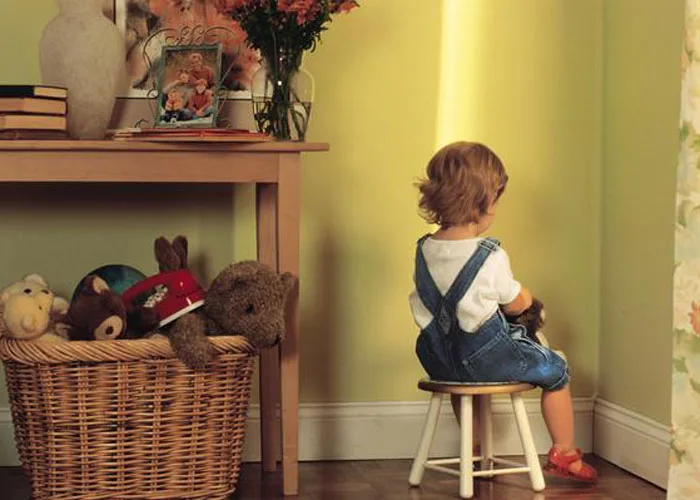
Break time (told age 2-12):
The impulse, aggressive or hostile and constantly repetitive, particularly effective in the correction of difficult behaviors. Its goal is to stop the problem behavior at the moment, rather than the negative discipline that undermines the child's relationship with the child. The long term is to teach the child to control himself in a boring place (equal to the age of your child.).
When punishing your child, you may show anger, but not anger, for he may think that you are punishing him for your anger, not for his abuse.
How Can I Discipline My Child?
1) Do it, or you'll hear a boy called "You know."He will do the most and obey the rule, but it will be fear that is more felt than respect for his parents' wisdom. Parents can control their children by setting rules and using various punishments when they are not followed, but if there is no mutual respect to be here, there is only outside discipline. The child does not know what to do, he submits because he is afraid of punishment. But when he is not afraid of punishment, he behaves as he wants to, because internal discipline has not developed.
2) Children need boundaries. A child who has learned to act within family boundaries is easier to adapt to other social environments (school, work, etc.) that he has entered in his life in the future.
3) Rules must be set, they must be understood, limiting and specific. When rules are created, the reasons must be spoken in a mutual way, the reasons behind them, and the reasons for not following the principles and the rules that they will win and the consequences of not complying with them.
4) Parents and children may engage in a hostile relationship while trying to take control. To win, the other side must lose. Parents who react to showing who is the boss in the house, eventually lose communication (e.g., everybody loses.) While parents who act, taking their decisions with their children, taking their decisions, taking them into account, and explaining the reasons for the rules, gain their authority, honor in the eyes of their children.
5) The key to discipline is to predict and take the necessary precautions that a child can do, for example, to make the house fit for a child who starts walking, so that you don't have to often say no to the child and then go into a power struggle. No one likes to say no or to say no to him all the time. The chances of success are greater when the child is said and the determined charity is said when it is necessary.
6) It is difficult for most parents to say no to a child because they face resistance, and it is much easier to let children behave as they please, but that calmness is short - lived.
7) Send messages without a response to the message: Do you want to drink milk instead of drink it with a glass or with a red cup?
8) Express in positive sentences what you want done: Take off your shoes and tell them to put on their slippers.
9) Underprotection is a problem for children, and without parental direction, the child who grows up in a system of uncompromising environment has to make many decisions and have difficulty, and they may be angry with life.
10) Children of over-responsive families are children who are not caring for what they have, who are hard - satisfied, selfish, who are demanding for service, who want attention, and therefore have a weak social harmony.
11) Children who know what is expected of them, act according to it, get less confused, and sometimes the only message that needs to be given is that I want you to do it, because when you say it's my duty to think about your mother and your safety and your health, it's your responsibility to take responsibility.
12) Often boast about the good behavior of the child, avoid rewarding his bad behavior: If he is not shown this attention, he tries to see it through bad behavior. So he notices his good behavior and boasts about it in time, reduces his bad behavior. When he is not interested, the parent scolds him when he acts badly. This is a form of attention, because the child has succeeded in drawing attention. Sometimes he cries, cries, cries, cries, cries, cries, cries, cries, cries, does what he wants when he sees he does not shut up. The reward here is the cry that is the behavior that is the only time that he is rewarded when he cries.
13) Timing is also vital. If you want good behavior to be repeated, you must praise it immediately after the course of action.
14) Our child does not need constant praise for all the good he does. You are perfect, princess, like the most beautiful girl in the world, unrealistic praise leads to over-extended self - exaltation and self - exaltation. As he grows older, the child becomes frustrated, dissimilar.
15) When you discipline your child, always focus on behavior. What you criticize should not be the personality of your child, or the child should not love me, not want me, and I feel bad that he will lose confidence, even if he thinks that I am bad, he will try to be worthy of that title, and they will act really bad in his future.
16) All discipline methods used should maintain and improve the child's respect for him. The child should not be scolded or humiliated in the community. If we warn him, you must do so alone, and only he and you should hear what is said.
17) Being fair is not about being the same to everyone, but about each individual, and everyone has different needs.
18) See the world in your children's eyes. Their behavior is often impulsive; they may act wrongly to get what they want at the time. Their goal is not to defy your authority by thinking. The key is to know your child by thinking, to know his needs for his age, and to decide how to discipline him. If you know how to make him obey at least as hard as possible, that is discipline.
19) You need to determine at what stage your child can take care of himself and at what stage you must seize the situation.
20) Allow your children to make mistakes and learn from their mistakes, and the results of the choices that have been made shape the children's decision - making skills. 21) If something prevents you from disciplineing your child, expose what it is and try to correct it.
|