
ÇKids I&ject;in GünG&um;n&um;KRIP Why So &Oml;Why So Important? Experts AçHere are 7 Critical Reasons That Support Their Development:
ÇWhy is it that the children are both physically and psychologically developing, and why is it that they are playing roles? &Ompossible? &Omperation and elementary school &ccellable; &ccellable;formations such as the normal time of the children's physical and psychological development;mighty;means are playing role in their physical and psychological development. &Oml;Emplifiedly, and the primary school &sy;omul;and the primary school çolum;/omul;/omul;/omul;l;lugmultivity of the children's sense of the child's ability and the child's ability to improve and increase;multivity;multivity and the sense of the age and the moment is also a factor. &o</i>i>i>l>Im;Im;l>Im;Im;Im;Immmplicivity and the sense of the sense of the sense of the level of the level and the level of the level and the level of the level of the age and the level of the level of the level of the level of the age &o_l<l<l>l<l>l>l>l>l>l>l>l>l>l>l>l>l>l>l>l>l>l>l>l>l>l _lt;l _lt;l _lt;l>l>l>l>l>l>Gl>l>I>I>I>l>l>l>l>l>l>l>l>l>l>l>l>l>l>l _lt;l&

- Ç Why do children need routine; hear?
When adults plan time with hours, they perceive things that they have experienced in their lives <i>In the same order;i>the addition, &ccell;i>helps them understand their environments more easily and feel more and more clearly;i>and help them feel more and more familiar.
A rich life plan is a way of reducing children's anxiety from uncertainty, while the family is a part of the feeling of stability in it.
G¨n<kR<k ç7 &oluml;result benefit children;
1st D&huml;Grows up the habit of sleeping and feeding
Every g&um; same time as the same sleep, wake up, and eat ç helps to reduce the children's biological clock. This affects both physical development and attention and &oluml;responsive performance.
2. Özg&um;ven and support independence
ÇKid, öWhen you know when to make your giant, when to collect your toys, or when to add your bedtime preparation in what order do you need to be reminded regularly;he doesn't hear. &oluml;resistantly increasing his life.
3rd Family Ties are g<i>Stuff;/i>
Eating together every night, eating together, talking about how you're doing, playing family games, or playing together on the weekend, and repeating events like doing work, &ccellable; it makes the children's sense of belonging, and it makes them feel good.
Experts say that the rich family rhythm; their hands are ç they allow children to give more and more to family relationships at an older age.
4th Healthy habits are made
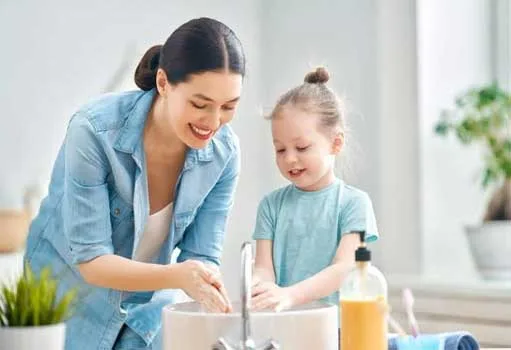
As soon as you get home from school, you wash your hands, teeth frilled; pick up, read books, or study at certain hours; practice behaviors like that, over time, into automatic habits.
These habits also contribute to discipline development at older age &oluml;z.
5th Clears Expectations
Ç children feel more at ease when they know what's going to happen in them. Plans such as a social visit or a family event on Saturday help children develop positive expectations for the future. çnemily helps children develop positive expectations.

6th Increases Excitement and Motivation
The program is a program that knows its favorite activities; children, g&huml; more enthusiastic than theirs. The activities it expects to improve its motivation make life more enjoyable.
7th Amendments give their mothers a sense of feeling of lust
School start, divorce, birth of a new brother, or different life changes can be a source of stress for children. re: This d&oum;re helps people to feel more comfortable and adapt to change. &ccelled;and it helps children to feel more strongly and more adapt to change.
Ç children are i>in g>what is the routine?
Social psychologist Susan Newman says routines can be created from the beginning of life. However, at any age, we can start a program that is very different from the beginning.
Start with basic caution 1.
First of all,
- Sleeptimes
- The meals
- Search & name;
- Playtimes
- Read the books
A specific d&uluml;replace ç to fit in the brain;get it.
2. Be patient
It may take time for new habits to develop. Ç Get used to the routine; instead of pressing the child's script, it gives a healthier end to moving forward with the steps.
Remember to be flexible
The routine is to make changes, but not every g&um;n&um;n&n&n&n&n;n&n&n;n;n&n;e.
&Oluml from experts to families;reals
Ç son development experts, g¨n&um;k routines should not only be a discipline tool. D¨enough family time, quality communication, play and rest hours should also be the integral parç of routine.
Research shows that their ability to live is more likely and more likely to adapt to school life.
G¨n<n<i>Protecting routines, çonly bug &solve;no one's life is not making their life easier; in the future, time is not making it easier; in the future, taking responsibility and &oluml; in the life of discipline; it also provides the basis for their ability to feel more independent; it also gives experts g&oluml;re vemul;<> <i>In the age of their own, and more independentness; <i>I'm more and more independent;I'm making it possible for the more and more independent.