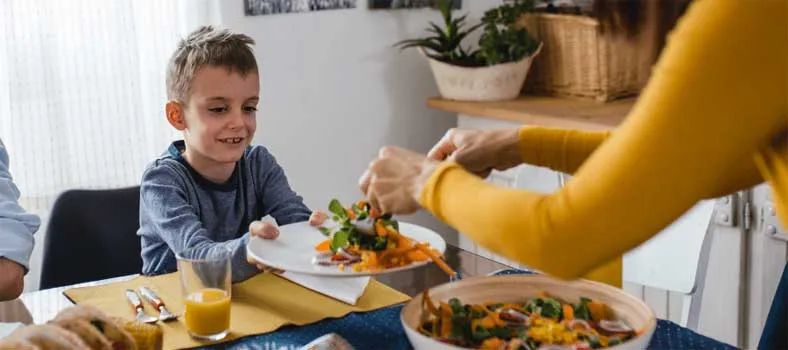

Ç The role of families in the healthy habits of children; it is not discussed. The behavior of experts is not limited to meals, such as patience, sharing and kindness; the quality of parenting, parent ç &oluml; one of the skills of life in school; &Ccell; &cell; is positive to the area of life; <i>The quality of life;/i>The quality of life in school life is positive to the area;/i>The quality of life is not limited to the hours of food;/i</i>The quality of life is positive to the quality of friends.
Experts say that the most effective way to teach children is by their own behavior. Ç children &ccell; from the stars &ccell; from the stars; from the gö from the family's direction; every behavior displayed in their character development is a place of satisfaction. &nominated.</i> <i>

Ç to your child the Best Way to Teach
How Parents & Ccedil Can Win the Table of Their Children
One of the most frequent mistakes the family has made is to teach the family to eat their meals in a time of education where they are constantly warned. &ccelt;i>But the children are peaceful and pleasant geccedil;and the rules are more easily adopted at the family table. ç/o</i> <i>
Parents' ç whether their children recognize and appreciate their right behavior rather than just focusing on their mistakes. Öresponsive;formation ç child using peçressing, taking food from the service plate, or eating food from the service plate, and the positive behaviors that make them permanent. &oluml;v&uum;i>Imagnating these habits make them permanent.
Families Should Give Reputation From Age
Ç child development experts, parents ç children; <i>They want them to include the preparation of the table from their early age. Çal, spoon, plate and peç how to place the environment &olumn &cced;ress;children are both less responsible and more comfortable to take responsibility &ocution &ocutive;/i<i>and I am the most likely to do it.
Experts stress why the rules are so important instead of just saying "bö do it with" by parents, but why the rules are so important, and the rules are so effective. B&oluml; so &ccell;so instead of memorizing, they can understand the logic of behavior.
Parents Should Guide Sü Instead of Enduring Criticism
It is a more accurate approach to use constructive expressions than to strongly criticize experts for every mistake they make.
Öyour color;
"If you don't want your glass dirty, you can wipe your mouth with water.
like y&oum;relieving c&o;mals, çwatering the children;helping them to find the right behavior without feeling exposed.
Parents can make restaurant visits their chance to train
Experts like to see parents ç their children at times table d<your size &o<i>really like to see them in restaurants they like. ç/i</i>So on;/i>and so on;/i>and so on;/i>
- Thank you for the waiter,
- Waiting in line,
- To speak quietly,
- Staying at the table until dinner is over,
- I'm not trying to respect anyone else.
- & can be found in natural environments.

Parents & Ccedil; Tell their children what Should Not Be Done on the Table
Experts want parents to say why behavior is right or wrong instead of setting up bans on their children.
öespecially avoid the following behaviors; need to be found:
- Talk with a bite to eat.
- Smooching while eating or dyslexic voice ç dissecting.
- çok b<i>Get some bad bites.
- Watching other people's plates or how much food they eat.
- Using words that say, "I'm not a good cook."
- Çatal, spoon or bçto talk with the table.
- On the table, speaking or arguing in the dark.
- Taking care of the phone or tablet during dinner.
Ç children's K&jummud;<</i> Age & Ouml;The Rules of the Table of the Way to Be Found
Experts remind the children that they can show them their rules. çcoins: <i>The basic rules of kindness &ocutive;the rules of education, the current &um;uuml;suchl;/i>the rules of being a guest;/i>ress are also said to be respected. çSo çand so the basic rules of the children's early age;and the basic rules of the following:::
- When you're not sitting at the dining table, your hands need to be washed, if you have them.
- It is a habit of helping family members or hosts prepare and gather the table.
- After sitting at the table, the peç should place its material on its knee and use it to wipe its mouth with peçte.
- The host or the person who prepares the meal must not start eating without everyone seated.
- Çal, biçfor food like a spoon and a fork;to use their food correctly;to use it correctly;to know that some foods can be eaten by hand in a proper manner.
- He should sit up straight during dinner, take a proper stand in the chair.
- He must be removed from the table.
- He should be gagged and not talking with his mouth shut.
- He should rather eat with the food than take the food.
- He must know that such actions as burping or veering can be a nuisance to others.
- It should be more like you not to slurp the food.
- He must wait for others to speak without interrupting and watch everyone listening at the table.
- Instead of reaching for a food far from the table, he should ask nicely to be extended.
- "I want something," "help göo<i>and when he wants something, he should make it a habit to say, "Thank you."
- He shouldn't criticize someone else's plate, how much food he eats, or how much food he eats.
- If there is a health problem, allergies or &oluml;also polite, he should express it to the person who is well fed.
- The use of telephones, tablets, and similar electronic devices during meals should be avoided.
- If he has to leave the table, he must get up asking permission or saying, "Excuse me, short süremult your period; I'd like to ask your hour."
- Everyone should try not to leave the table until they've finished their meal.
- He must be willing to pick up his plate after dinner, help the table to be refurbished and take responsibility.
- When he leaves the table, he must take his chair instead of his chair, to be careful not to spoil the brain.
- When leaving a house where he is a guest, he must remember to feed and welcome the host.
Experts say that these rules are not to be developed at once, but to be developed at once. They are to be understood by the basics of the sophram, not just by the g&olum; not by the rules; not by the respect, not by the parent &oluml; not by the natural habits; not by the natural habits; not by the natural habits; not by the natural habits; not by the natural habits; not by the constantness of the system.
Phone Use at Family Tables Must Be Limited
It also has a lot of information that parents limit phone and tablet use during meals. Research shows that family is less in the tables where the screens are a&ccellable; family is less in the way of communication; &ccedl; children can attract social interaction; they are less in the way of social interaction.
Therefore, families are advised to create meals, as often as possible, as many sitting together, as many conversations, and as many away from screens.
Parents Must Not Forget - Table Rule Is Education That Prepares Life
The students can develop more social &ccellary; in the universe and in their future lives; in the school, they can improve communication skills.
Hence, parents should not be about raising children; they should be about raising family dishes in a warm environment where love, respect, and sharing are naturally developed.
ÖRelax to Parents: "Not by Explaining the Table Adjective, &Oml; Teach by Living"
Experts stress that the most effective way to provide table manners for children is to be &oluml by the behavior of parents. Çthe children are &ccelled by the rules that follow; the adult's behavior in life becomes permanent in time. &ccell;/uuml;n</i>The family's behavior is becoming permanent. <i>Imperative in the family's behavior. <i>Imperceptive.
If ç children witness family dishes, they can display the same behavior by accepting it as normal. Experts say that parents should only offer the right model in their own way.
However, good öressing alone is not enough. The reason for parents' right behavior is açthe way they apply rules more easily. During meals, peçusing, taking turns talking, or waiting in order is one of the reasons why it is important to explain why it is important to talk and to be able to be able to support the growth: &oluml;uuml;uuml;re.
Experts also remind us that it is not necessary for children to expect new habits to be achieved at once. It is also clear that they do not need to put their property in their directory or to use their address correctly. It is said that the same reminder may be necessary to be made repeatedly.
Research shows that children can be more willing to apply their parents' Yö their parents' comments in school, guest or restaurant social environments. Experts are therefore more likely to get them at home &ccel;so they are in a hurry to get them to the house; their rules will also be reciprocal; they say that they will also respond to social life; &ced;and children should be given g&o; <olum;olum;and therefore they need to be given a sub-profile; <i>resssssss;so they need to be rushed; <i>s;ands;andst;so they need to be rushed;i>