

Both family and society are iç acceptance gö one of the most important conditions of the process is empathy. Empathic d&um;um;multible ç children can better interpret what is happening in their environment; they can understand the problems of others and their relationships are easier to understand and their problems are more easily &cceptive;<</i> <i>They can be more easily understood.> <i> <i>
This allows them to accept and accept the features of other çs; they easily accept them. Here, ç improve the empathy capabilities of children; some threads for parents:

To help babies and kü<<i>To help children develop empathy and to understand that others have different feelings and feelings;/i>try these practical threads.
| The ones in the iç:: Ç 7 Ways to Get Empathy Feelings for Your Child |
K&UUMl;<<i> ÇTo Help Your Child to Develop Empathy; <i>What Can You Do?
Empathy is the ability to imagine, imagine and respond carefully to how someone else feels in a certain situation. This emotion is actually a complex skill.
Empathy with another person is a ç it makes the child understand:
- He realizes that he is a separate person, he has a personality;
- He understands that he can have feelings and joy, different from others themselves;
- Ç recognizes the common emotions of many people; happiness, surprise, öfke, disappointment, &subject; etc.;
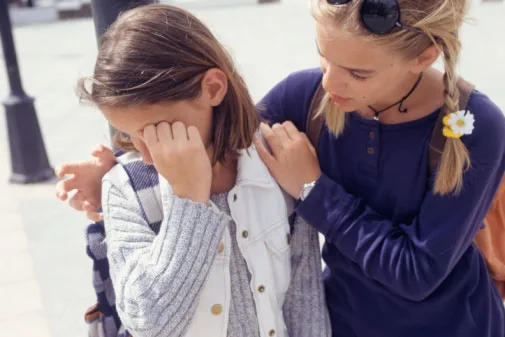
- He can look at a certain situation (like watching an associate say goodbye to a parent in child care) and imagine how he and his friend might feel at this moment; and
- He can imagine what reaction can be appropriate or comforting in a certain situation, like offering his friend a friend a favorite toy or teddy bear.
2. Ç Empathy Ö Be a lover of your child;
It is important to recognize the feelings and the care of other individuals in your group as well as their feelings. To recognize the feelings beneath others' actions, to understand what these feelings cause, adapt;in çok &oluml;oluml; to understand the emotions that are underlying them.
Ç the boy needs to show empathy gö he needs to understand and share other people's feelings. This is not a skill that can be cured if he has a common problem with people around him.
3.Ccedil; Development of the Child's Empathy Emotion;in What to Do?
Ç your child is aware of empathy; you can try:
3.1. Ç When your child does something that hurts someone, avoid doing the same thing that was done to him. Instead, focus your attention on the child and on his feelings. ç then the hurt &ccell; make your child feel better; make him do something to make him feel better; instead, make him feel better.
3.2.As soon as you witness someone's empathy, you can see that this is a &ccellable; tell your child how much a neighbor who knows you're sick can bring a cup of food; &um;um;um;sup;sup;sup;sup;sup;sup;sup;sup;sup;sup;sp;sp;s;s;s;s;s;s;s;s;s;s;s;s;s;s;s;s;s;s;s;s;s;s;s;s;s;s;s;s;s;s;s;s;s;s;s;s;s;s;s;s;s;s;s;s;s;s;s;s;s;s;s;s;s;s;s;s;s;s;s;s.s.'s.'s.
3.3. Ç When your child tells school bullying, nicknames and pranks, play a role-change game. Ask him to replace the child and how he feels.
#Reclamation
3.4.Ç Make sure you listen to your son when he's telling you something or sharing his feelings with you. This will tell him that you've given him the feeling and the feeling of the other people.
3.5.Ç Read to your child (magic narrative) and after reading, you can also have an idea of the emotions and the feelings and the tastes of the characters in the book. ç talk to your son. <i>B<i>The sense of squares and d<i>and how much your child understood (shared) can do the same thing while watching television.
3.6. &ccelt;i>To tell him about your feelings and your experiences and your experiences. ç/i>To tell him about your feelings; ç &ccelt;Interest your feelings and tell him about this relationship &um;i>Get him to tell you about it.>

çYour son didn't want to eat a meal you'd been working so hard on, and you're trying to make it the same way I'm trying to çno,I'm trying to ruin the car I made. çand in this case you're doing your son &ldilquo;and you're trying to eat it, çand I'm trying to make it the same way I'm trying to do; &ccel;l<l>I'm trying to ruin the car that I'm making you, çI'm eating it, and I'm trying to make it so you can're not eating it so easily. <i>I>I>I'm trying to eat it all the same way. <I'm trying to make it. <I'm trying to make it. <I'm trying to make it. <I'm trying to make it. <I'm trying to make it. <I'm trying to make it. <I'm trying to make it. <I'm trying to make it.
This activity is particularly important; &ccell; ç<i>The children have an idea for empathy;in çin çok öa very important role in understanding abstract concepts. &ccell; &ccelt;/ccedil; ç;;/i> at this age;and children are inclined to understand concrete &oluml;i<i>res &oluml;i>Imbs &oluml;i<i>i>Imbs are prone to abstract concepts.
3.7.Ç çThe problem with your son's fights with his brother; <i>You have a chance to help each other understand their feelings and their feelings and their feelings;/i>and you can use the list to explain that there is a meaningless and end-to-end activity in the conversation; Ç your children ¨i>you can also give them a way you want to talk to your authority. <i>You can also help each other understand this. <i>This is a meaningless and an activity after this conversation.>This is a meaningless and an event that you want to give them to give them a future. </i>I>I>I>I>I'm sure you want to give them to give them a meaningless and give them to you can.
4 Remember Feelings - Apparently Ç The Child's Problem - Too Less
Their feelings are understood by their parents; their behavioral problems will also be reduced. Also, the sense of understanding can be easily recognized and m&humdil;in &olum;in &olum;formation çaccedil;a very disorientation of their behavioral and behavioral problem can be easily recognized by the way they are suffering from and often expressive behavior; Ç &cluml; &cdil; çand their behaviors;and their behaviors can be very indirect; çand their behaviors can be easily recognised and m¨ands can be easily recognized by the way they are suffering; &cced;and their behaviors are often indirect;/i>
If parents are sensitive to their feelings, if they can recognize the source of changes and the basic emotions that are causing them, they can also detect problems that are light and are possible to become heavy.
Patience. It takes time to develop empathy. Ç your child probably &um;jedil; when he reaches his age, he will not be a perfect empathic being. (There are some genes and even adults who are not fully mastered by this skill!)
In fact, a new y<r<i>starting to start to grow;i>to be a son;i>a normal part of being a child is to focus on me, mine and me. Remember, empathy is a complex skill and çand it will continue to develop throughout your child's life.