

8 Most Common Mistakes in Child Care | |||||
Try to Protect Your Child
To give milk before entering bed... to apply to antibiotics immediately in high fever... to keep the room warm at 24-25 degrees... no doubt every parent is trying to take every precaution to prevent their children from getting sick. However, because of the wrong information that is thought to be true... these kinds of mistakes in children's care can also affect their development in a negative way, and they risk their health, as well as their ability to develop a high-fire antibiotic, for example, to become the basis for the immune system to be the very very very important of the probiotic bacteria. To feed a child without a child who has no appetite for food in front of television.
Here are many By Parents Repeated Children's Care Errors
Error 1: Start eating, thinking that the baby's crying or being called too often, the breast milk isn't enough.
TRUE:
The most valuable and beneficial single breast milk is usually released enough to allow the baby to grow and grow for 0-6 months. So that the breast milk alone can gain about 600 or 900 grams per month. Babies are not much in their stomachs and their breast milk is digested quickly, so they are very hungry and often hungry. But in the coming days, they can open up between feeding hours, more and more powerful, and then open up between feeding hours. If the baby can get 600 grams or 150 grams per week, it can get at least this means that the baby is not very much gastric and the baby is very short-s; it is very short-sed, and it is very short-sed; however, the baby is less likely to be able to eat milk, and it is less easy to eat, and less easy to eat, because it is less easy to eat.
TRUE:
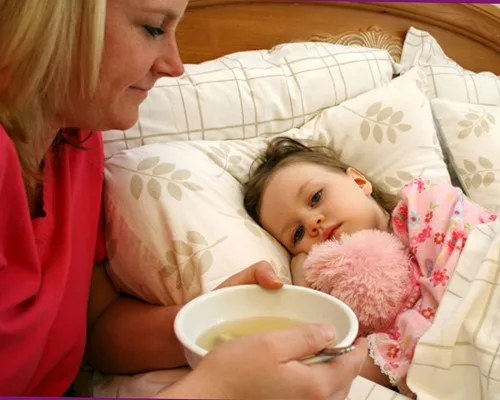
Whereas a large percentage of childhood fevers are caused by viral infections, and they can watch with fire for at least three days, sometimes five or seven days. There is no place for antibiotics in viral infections. So giving antibiotics unnecessarily is not only causing antibiotics resistance, but also causing the loss of probiotic bacteria that play a very important role in the child's immune system.
TRUE:
The child must eat with the family and the children at the table. The food in front of the TV is swallowed by the child, perhaps by the child, without realizing it. But the child does not taste and taste because he does not know what he eats. This can also encourage him to be a social child, not only by developing the habit of looking at videos and advertising, but even by breaking language development. &nbp; <gt;>> >> >>>> >>>>>>>: MISTAKE 4: >>To keep the kid warm, so he doesn't catch cold, or keep his temperature at 24 to 25 degrees.
TRUE:
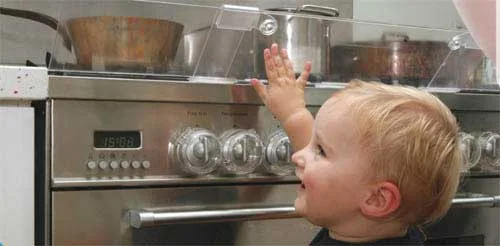
In winter months, some families are very afraid of getting colds, so they make them dress up tight enough to sweat their children, and they increase room temperature, which can cause excessive sweating, loss of fluid, rashes, skin infections, and unrest, so make sure that you don't over-dress your child and the room temperature doesn't exceed 21-22 degrees. You can only keep the temperature of the room in the bathroom at a distance of 24-25 degrees.
TRUE:
Finish eating and drinking without water for 1.5 or 2 hours before bed, and put your child to bed when he is empty. Especially after 2 years of age. This allows him to get up hungry and to become more powerful in the morning, and to prevent the risk of reflux. Remember that he/she can also avoid the unpassable upper and lower respiratory infections (substantive ear infections, cough, low breath, mouth odor etc.) gastro esophageal reflux (susp) and more common common common common to the esophagus; and also to the upper and lower throat infections (s).
If your child is only getting breast milk and is improving well, don't give any more food until the sixth month is over, but as soon as the six months are over, start the supplementary food, otherwise both the breast milk may be not enough and your baby may not be able to adjust to food.I'll take a bite.Whether it's a breast-fed baby, it can cause many problems such as the start of supplements in the fifth month, especially before the fourth month, allergies, infections, and digestiveism; and the child, who is fed with these nutrients, can be cut down early, because she will suck the breast milk less.
MESSE 7:
Give her a fever-resistant drug before her body temperature reaches 38 degrees.
TRUE:
Fire is not actually the result of the disease itself. It is described as a physiological event to protect the organism. However, many families give a mild fever reduction, even though they are not in the form of fever. This especially causes the body to break down, especially in children over 6 years of age, because it can defuse it, without being able to take the temperature, it can also be expected to reduce the fever by 38 degrees. It can also be expected to cause the fever to be removed from the system before the vaccinations. or even immediately after the vaccine, it can cause a deflammation of the body to be affected. These studies also cause the use of drugs to increase and even increase the drug.
MIDDLE 8:
Sunscreening babies while sunbathing
TRUE:
Do not put on sunscreen while sunbathing your baby. During the summer months, the sun is sunny and beautiful; the morning is not able to do the morning; it is 9 am-10:00 and 1600 hours in the afternoon; and from 10ar minutes only, give the baby 20 minutes a day without cream, so that they can be able to keep their skins in the sun for a whole winter; and that's enough vitamin D to be covered by the sun; but because the sun is protective, the skin is creamed UV rays can't be synthesized by vitamin D, if possible, and even if it is in the shade of their skins; and the sun is already in the sun; and the sun is also necessary to protect every way that is possible. |
|