
Advertising
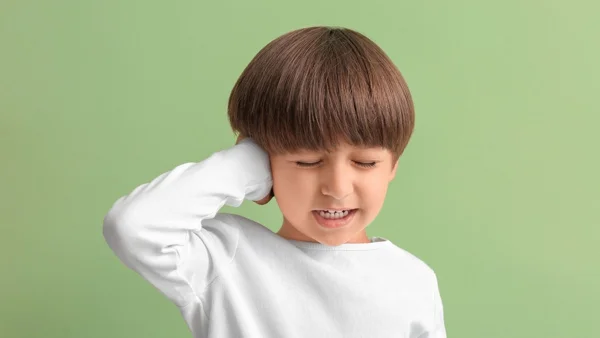
Ear health problems that are frequently encountered during childhood, such as fluid buildup in the middle ear, often progress without obvious pain or fever. In children who are particularly prone to this condition, such as those who listen to the television at high volumes, respond slowly when called upon, or repeat what they hear frequently, it is important to investigate this condition. The fluid that accumulates behind the eardrum can make it difficult for sound to reach the inner ear, causing temporary hearing loss. Prolonged hearing problems, especially in early childhood, require close attention because they can affect speech and language development.
Dr. Deniz Özlem Topdağ, an Ear, Nose, and Throat specialist, emphasizes that fluid buildup in the middle ear does not always indicate an acute ear infection. She explains that in some children, the fluid behind the eardrum may persist even after the infection symptoms have subsided, and that it is important to monitor hearing and middle ear health during this period.
This condition, medically known as effusion otitis media, is defined as the presence of fluid in the middle ear space without acute infection symptoms. It is also known as fluid in the ear or serous otitis.
For the middle ear to function normally, it must be filled with air and maintain a balanced pressure. When this function is disrupted, fluid buildup can occur. This condition is common in preschool children, and in some cases, it may resolve on its own, while in others, it may persist for a longer period.
The amount of time that fluid buildup lasts, the extent to which it affects hearing, and the child's developmental characteristics all play an important role in determining the treatment approach.
What Causes Fluid Buildup in the Middle Ear in Children?
The Eustachian tube connects the middle ear space to the nasopharynx. This tube helps to equalize pressure in the middle ear and drain fluids.
Children's Eustachian tubes are shorter and more horizontal than those of adults, making them more susceptible to dysfunction. In particular, swelling of the mucous membranes during upper respiratory infections can block the Eustachian tube, preventing proper drainage.
When the Eustachian tube cannot open properly, pressure changes occur in the middle ear. This can lead to fluid buildup behind the eardrum.
One of the main causes of fluid buildup in the middle ear is the persistence of fluid after an acute middle ear infection. The fluid may remain for a period of time even after the infection has subsided.
Enlargement of the adenoids can also affect the Eustachian tube. The adenoids can block the opening of the Eustachian tube, making it easier for fluid to accumulate in the middle ear.
Allergies and other nasal conditions can also contribute to fluid buildup. However, fluid buildup does not always occur due to allergies.
Children with Down syndrome, cleft palate, and other craniofacial differences are more likely to have Eustachian tube dysfunction. Close monitoring of hearing and middle ear health is important in these children.
Advertising
What Are the Symptoms of Fluid Buildup in the Ear?
One of the most important features of fluid buildup in the ear is that it can progress without obvious infection symptoms. Unlike acute otitis media, children with fluid buildup may not have high fever or severe ear pain.
The most common problem is hearing loss. The fluid behind the eardrum can interfere with the transmission of sound vibrations, causing mild to moderate conductive hearing loss.
In young children, hearing loss may not be easily detected. Therefore, parents should pay attention to behavioral signs.
Signs that a child may have fluid buildup include: listening to the television at high volumes, not responding when called upon, repeating what they hear, and difficulty understanding what is being said in a crowded environment.
Some children may experience a feeling of fullness or pressure in the ear, or a mild discomfort. However, some children may not experience any symptoms at all.
In school-aged children, problems such as difficulty understanding the teacher, decreased participation in class, and attention problems may occur.
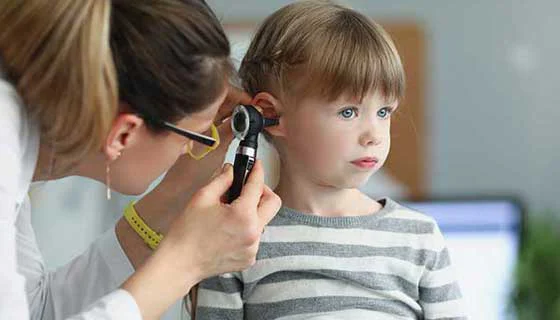
It is important to note that behavioral or learning-related problems should not be attributed solely to fluid buildup. In children with hearing loss, an otological evaluation is necessary.
Advertising
Can Fluid Buildup in the Ear Resolve on Its Own?
In many cases, fluid buildup in the middle ear can resolve on its own over time. In particular, fluid buildup that occurs after an upper respiratory infection can resolve as the Eustachian tube function returns to normal.
In children with mild fluid buildup and no significant hearing loss, a period of observation for about 3 months may be appropriate.
However, this period of observation is not always appropriate. In children with significant hearing loss, persistent fluid buildup, or structural abnormalities in the ear, earlier intervention or close monitoring may be necessary.
In some cases, a ventilation tube may be placed in the eardrum to help drain the fluid. This procedure is typically recommended for children with bilateral fluid buildup that has persisted for 3 months or longer, and who have significant hearing loss.
The benefits and risks of ventilation tube placement should be discussed with the child's doctor. Possible complications include tube falling out, ear infection, or perforation of the eardrum.
In some cases, surgery may be necessary to correct the underlying cause of the fluid buildup. This may involve removing the adenoids or repairing the Eustachian tube.
Advertising
How Is Fluid Buildup in the Ear Treated?
When Are Ventilation Tube and Adenoidectomy Considered?
If fluid buildup persists for a long period of time and affects hearing, surgical options may be considered.
Ventilation tubes, also known as tympanostomy tubes, are small tubes that are inserted into the eardrum to allow air to enter the middle ear. This helps to equalize pressure and drain fluid.
Ventilation tubes are typically recommended for children with bilateral fluid buildup that has persisted for 3 months or longer, and who have significant hearing loss.
The benefits and risks of ventilation tube placement should be discussed with the child's doctor. Possible complications include tube falling out, ear infection, or perforation of the eardrum.
In some cases, adenoidectomy may be considered. This involves removing the adenoids, which can block the Eustachian tube.
Adenoidectomy is typically not recommended for young children unless there is a specific medical reason to remove them.
In summary, fluid buildup in the middle ear is a common condition that can affect children. Early detection, appropriate management, and close monitoring can help to prevent hearing loss and other developmental problems.