No pressure should be put on her child to eat.
Slowly, different nutrients must be tasted and taught to be healthy and unhealthy.
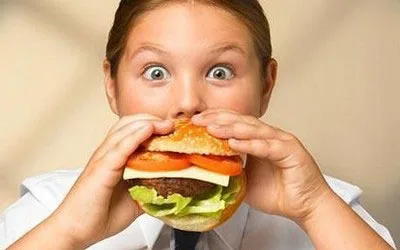
It must be accepted by adults that the chubby child is not a healthy child.
A child must be allowed to participate in an exercise program that is appropriate for his age and for his child's child.
If your child has What Should You Do if Obese?
First, the mother-father must preclude the child by being conscious of this matter, and then a nutrition plan must be formulated by consulting a child health specialist or an endocrinologist after they've been examined.
It is vital that children maintain a diet that will meet their body requirements for growth and development to last in a healthy manner.
Certainly, a limited or unconscious diet should not be implemented without consulting an expert and should avoid psychological pressure on the child.
Since food is the most important form of expression for the child, it should not be forgotten that eating disorder can be used as an expression of some emotions, if necessary, to cooperate with a child psychiatrist.
The ideal approach to childhood obesity is to regulate weight gain while providing sufficient nutrition to sustain growth and development.
Food restrictions are not recommended in childhood when growth is fast, but rather in the case of over-eating nutrients, nutrient-rich nutrients are preferred.
In childhood, a certain banning of certain nutrients may increase the tendency to be restricted to food, rather than over-restricted to food, and a approach to offering healthy food alternatives should be adopted.
In childhood, physical activity should be primarily focused on increasing. Exercise may not reduce weight significantly, fat tissue in the body is replaced by muscle tissue and changes in the amount of fat-cassity. Best of all, long-term low-density exercise such as walking can also be recommended for rapid results.
Parents' role in preventing and correcting childhood obesity is very important because they provide food and make models, and they need to be careful to provide healthy food and inter-food options and to set a good example of nutrition and exercise.
How to Treat
The obesity is now thought to be successfully treated only by multi-participation, by a program based on self-organizing and behavioral patterns. The growing eating problem today should avoid determining a kilo target, considering problems. If the weight is not too high, it is useful to determine a program that does not target weight loss.
The diet of dietary diets, which is to change the diet for a short period of time, is inadequate under the control of obesity alone, and the weight loss must be regulated and monitored by diet behavior to be permanent.
One way to increase physical activity is to limit access to sedentary activities with changes in the environment, which may require a boosting or even persistentness to increase physical activity.
Obesity is the most effective form of long-term obesity control, which requires increasing public awareness through education.