
ç psychological m¨result at the right time and correct time;i&ccelt;i<i<i>i>is carrying a fluid. depremzede çWe asked the experts what to take care of when helping children with psychological yö/nbsp;/nbsp;/nbsp;
ç said that if there is a parent loss in the earthquake, the child should be given the information by the person who should be responsible for the child if there is no parent loss, the expert Clinical Psychologist Elvin Fluci Guest said that the child should be given the information by the person who takes responsibility for the child.
Guest: "He should be told to be traumatized, even though he is traumatized. He should be touched, not hidden in his thoughts, not to be disturbed in his pressing, ç he should be allowed to express his feelings.”
Specialist Clinical Psychologist Elvin White Guest,ç in earthquakes like earthquakes; approach to children He's given a review on the subject.

|
Iç: Depressed Ç How to Give Psychological Support to Children |
1. Who should be able to repeat?
The experts who receive the trauma should give the necessary psychological support. The psychological müthe increase should be done at the right time and in the right direction. çnextly the child needs to be done by experts without trauma;nexecutive psychological m&um;it is not appropriate to be done more than the person who provides support and &ccedl; therefore, it can do more damage to the child than the emotional accedil; and therefore, the trauma and the media needs to be done by the experts; and the right way to do more than the right way; and the right way to do the right thing.
2.In the first phase Ç in the child's basic need; in the first phase; in the first place he must be met;
The first stage of the earthquake was çthe goal for the children is undoubtedly to meet the most basic vital need for nutrition, housing. çthe children should only be able to re-create and re-create this emotion after they are met; they are ready to recover from it and stabilize. After that, they are ready to re-establish and then connect and then establish bond and then to create emotional arced;form and then to re-create the child from emotional agglust; and to restore the emotion; and to create the feeling; and to restore the feeling.
Ç in Earthquake 3; Understanding the Child's Psychology
- G¨velled bonding in overcoming trauma önbsp;
ÇThe current bonding between the child and the provider is essential. &ccellable;if the child is protected, then if the child is able to maintain the routine, &ccelt;or if the child is able to maintain the care, then the other person has a ability to handle it. ça &olum;a &oluml;i>If the trauma is easier to maintain;/i>and if the child is able to maintain the routine, ç/i</i>If the child is more easily maintained;/i>and the child is more easily maintained;/i>and if the child is more easily connected.
- Don't hold your hand with compassion, don't hold your hand, don't connect with me.
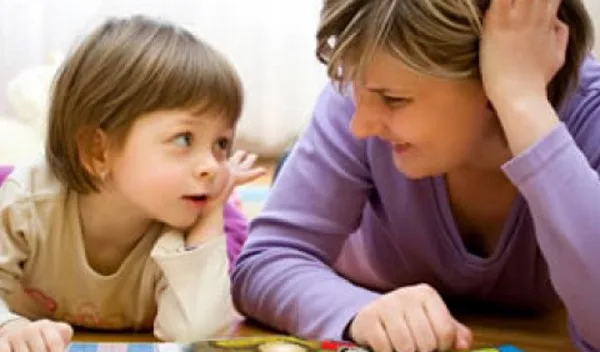
Adults need to be able to provide a soft, non-simply tone of sound towards children. &ccellable;means of sound;mixing sound and violent stimuli to the children;and also the ability to maintain the triggering of children, such as hugging, patting their backs, holding their hands;multiple touch;multiple contact;ms of sound;or other than the sudden and violent stimulus;and the same will also help to help them to maintain their own systems of anger.
Ç children's günl&um;Strutual routines should be kept as long as their routines are continuous, and they should be created as well as the regular sleep and diet program. In addition, it is necessary to make them act by creating activity fields, so as well as to stress their presence, and their presence, and their presence.
#Reclamation
4th Earthquake Victim Ç Ways to Connect With Children
- Play Ç children are I&jed;in GüI>A Bonding Tool;
The game is useful to perform trauma; we have been effective and gü it is a respite; a respite; a release can be made through the game; ç to explore the difficult things to understand; to make sense of things in school; to play every t<resss; to play the game; to make their life useful; to make their life easier; to make them feel better by repeating it; to play it again; to play it again; to play it at school; to play its games; to play its games; to play it more in the school; to play its functions; to play its needs and to play its needs to be done.
It would be a supportive approach to making their feelings about the traumatic experience and not to silence their feelings, but to make them express them as sö instead of the way they feel about it.
5. Öl<m GerçIs the child ÇWhen should he be sent?</i>
Ç after the earthquake the children suffered if their parents suffered açthe shortest possible loss of the spell is the quickest s<red and g<redil by the person he loved;/i>acced to the child;/i>it's essential to be bothered.</i>
If the child has no relatives, ça son needs to be delivered by the person who will take responsibility for him. Öl&um;m&m;m&m;m&m;m&m;m&m;m&jdil;m/jdil;Secrel;Squeak to the child;soul to be pressed, acced;feelings should not be concealed, &jective;and should be given appropriate and brief answers to the questions he asks. çand after the loss, he is asked, he should be given to express his feelings. ço</i>and so he should be able to be able to be able to express his feelings and express his feelings.</i> <i>D>D>D>D>Dl>Dl>Dl>Dl>Dl>Dl>Dl>Dl>Dl>Dl>Dl>Dl>Dl>Dl>Dl>Dl>Dl>Dl>Dl>Dl>Dl>DlNl>Dl>Dl>Dl>Dl>Dl>Dl>Dl>Dl>Dl>Dl>Dl>Dl>DlNl>DlNlNlNlNlNlNlNlNl>Dl>Dl>DlNl>Dl>DlNlNlNl>DlNlNlNlNlNlNlNlNlNlNlNlNlNlNlNlNlNlNlNlNlNlNlNlNlNlNlNl>DlNlNlNlN
The re-growth of the brain can be added by adults who look at the child and by rebooting the disease and d¨multability.
#Reclamation
This Süreccedil;Need both Emotional and Social Support
As a society, it is a very important issue to provide both emotional and social support, as well as the children, as well as the children move and socialize, not only when the earthquake occurs, but also later, to be able to maintain the continuity of support given.
&Cedil; boys resist; they are strong
Ç children have a fragile nature, but they are as resistant as they are. If the proper support is provided, they have the capacity to come from the &um;um; if the traumatic life is affordable, they are born with the capacity to recover; it is necessary to help them reach that capacity as adults.
6 How Can You Help a Earthquaked?
Create a sense of vivatity: Ç your son is a g&um;vell and g&um;venience is a sense of emotion; look at you. Your ability to remain calm &ccell;your child can do a lot; &ccellable;and share how you feel and how you deal with what is happening; and how you are dealing with all the other things that are happening; and how you are dealing with them.
Be accessible: Ç Allow your children to ask questions. Know that you can hear difficult information.
Tüm respect for his feelings: Ç your child's feelings, d<i>sounds and reactions may differ from yours.
Act your age: Each ç son reacts to his own emotional and developmental phase. Each stage brings a new dç a new understanding and how events are added. Therefore, it is necessary to describe events in words that can be understood by the child. &oluml;a new version is a constant.
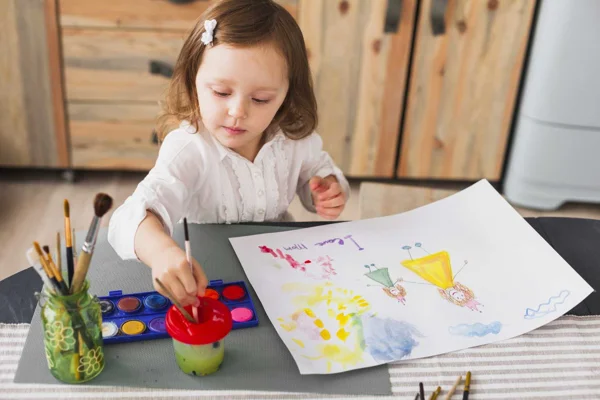
Express through game and art: Some ç children may not want to talk about their feelings or fears. Ç Help them express how they feel by playing, by playing, writing, or other activities that fit the age.
çerçrave: Ç your child will not only receive information from you, but also from his peers and media. Ç Ask your child what he knows. Ç Ask him what he knows. ÇIf he does, let him describe the earthquake and its effects with his own s&oluml;this will give him an opportunity to remove any false information or false opinion.
Train: Artçwhat shocks are and how they will be reduced in numbers and less g&multi; &ccelt;i>You may need to press on what they will become. &Ccell;responsible; give them the basic, accurate information they hear; and avoid details; <i> <i> <i>They will probably be able to avoid details;/i> <i>I>They will probably be.
Reduce media exposure: Ç Minimize your son's exposure to media coverage of the earthquake. &uculum;rörün<n</i>To look at the images or to hear the words çThe child's anxiety will only increase. &Oml;r<i>Your son's anxiety is a new earthquake;<< <i>Im;I can only be understood as an earthquake; <i> <i>Im;Im;Immm sure that the following event is a new earthquake;/i>and Immmplified; <i>Imlt;Imlt;Implied;Implified;Imensed;Imagable;Implified;Imagine;im/im/im/i>Im/i>Im/i>Im/im/im/i>Im/i>Im/i>Im/i>Im/Im/i>The victims of buildings;
Help: &Cedil; Talk about how your child can help other earthquake victims. Writing cards can help you to contribute to the community healing process.
Help Yourself: Instead of sharing your concerns, fears, and concerns with your child, tell an adult or expert.