|
|
Observing their attentions during the pre-school period, being sensitive to your feelings, directing your child to their interests and properties, will help your child to be right about the choices he will make in his own life, or simply to be happy in his life.
| |
How can knowing your child help you to raise a child?
• Try to be accessible and accessible parents above all else. Take time to be active parents, help your child to share with you when he has a problem or happiness he wants to share. At the same time, they want to do so, allowing you to have an opinion on their interests, their feelings in the face of events and situations.
What's your child? Watch him play with games and toys, toys and toys, from the choice of school in his future education, to the most important steps he can take when he becomes an adult individual, from the choice of a career. As one, you also observe the interest of your child in observing his games, and in this regard, choose to buy your child a structured toy, and to play with his own creativity.
- [Static]When you travel anywhere, when your child is watching outside, you notice and tell you about it. Ask questions, the things he wants to talk about can also give you clues about your child's interests.

Note what your child wants to help you with as parents.
Try to satisfy his curiosity by patiently answering questions he asks you about matters he wants to learn more about, and try to apply them in thinking about what else can be done to his curiosity.
For example: Your child He loves to help you with your garden and he's always asking you about trees and flowers, and besides answering questions, you can go out with him to the Botanical Garden, explore different plants, look at his paintings, read him about these plants, even plant the tree you call your garden, and make him take responsibility to water the tree.
• Note which stories you read to your child during the age of 5-6 may interest you more when you start reading in first class, and you can also go to the bookstore together and observe what subjects your child is interested in.
• In order to play in the parent class, the game column, which toys he prefers, the dialogue with his friends, or communication with people, shows the interest of the child. What he wants to do at home, whether he wants to spend time in the garden, or be alone with his friends, and so on, are important clues about his interests.
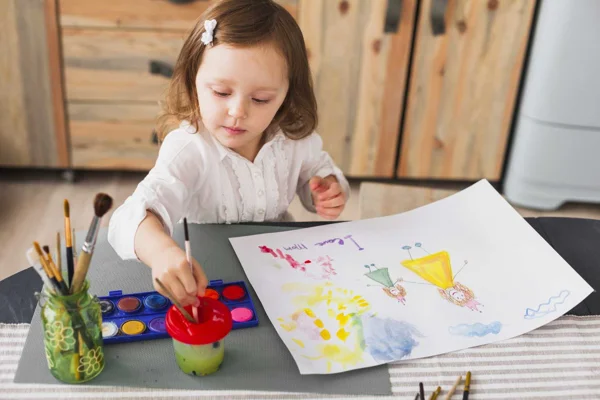
• Proceed your child to swimming, music, painting, etc., which you think is relevant. In the process, share his feelings and thoughts with him, what he wants to do in the future.
| |