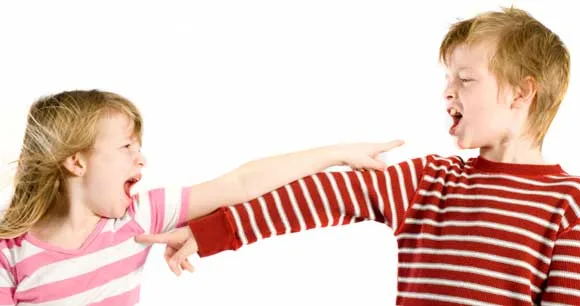

He doesn't want to be mocked, criticized and punished by his mistakes, and therefore he wants to make others feel more responsible for his actions.
çSüThe end of your child's conduct;how to apply his behavior to others &oluml;and if you don't know how to behave in a situation, then in 2017 the most valuable author, Ayşe Bilge Diclelirs&quo;in “Pencereni A¸” &noml;and if you don't know how to act in a situation, then you can try What is the answer?< <i>What is the answer?

What should parents do, and how should they behave?
|
&Cedil; in: Su&cdil; Non-Admit &Cedil; Insolving With the Child |
1.Açdik AçDesist You Do Not Accept
If you don't accept the waterccedil after a mistake you made, suçu If he throws it at others, you must address him as a "not accept"; and if you act, you can save the boy from deceiving himself. ÇThis is not the truth you're projecting. You broke the vase.&dquo; then he can believe that he didn't do anything to himself. çand you can save the boy from deceiving himself. Ç<<> <i>You broke the vase.>Then he can believe that he didn't do something to himself.</i>
#Reclamation
Ç your children Lie If you suspect that they've done nothing wrong, somehow make sure they fix or fix it. &Oml;If they paint the walls of the house, give them a bucket and a cloth: “Come on, the wall cleans up! ”
What Should You Do? How Should You Do?
Meanwhile, try not to get too heavy on the kids. ç ç ç/i> &celt;i>To keep the child in line &ccelt;/i>to find the people &ccelt;i>to find the people.</i>To find the people.</i>To find the people.</i>To find the children.</i>To find the children.<To find the children.</i>To find them.>To find them. </i>To find them.
The water ç to avoid throwing away the water; to be considered a perfect y&oum; to be cautious; to be able to develop the dialogue; ç to help your children. ç ç to ask questions; to ask questions; to make you feel perfect y&o;n &lquo;Arda’ to take over the business of buying bread this week? <i> <i>What else can you do when you feel like to take over the paper and bread? <i> <i>What else can you do when you feel? <i>What else can you do? <i>What else? <i>What you feel? <I>I>What you can've been wrong? <I>What you can't? <What you can't you can't ask the paper? <What you can't? <What you can't you can't?
Ç let the boy know that he can make mistakes, but when he makes mistakes, he has to find someone to throw at him. <i>If you don't immediately find someone to focus on looking for him, then you can raise his children in this way. &ccell;i>This is not your own behavior; &o<i>and accept your children's ease;i>and your own actions are less uncomfortable;i<i>if you don't grow up your own actions in this way, you don't feel the way of their behavior; <i>i>This is not your own behavior;i>i>Impert feel uncomfortable about their behavior;i>l;l>l>Im;Impert.
Ç of your children responsibility You're proud of yourself, you've found a way to fix your mistake and I'm sure you've got it. I don't know many adults who can do that.
What Should You Do?
Responsibility & Ccedil; Child - Raising; What Should You Do?
ÇGive your children gö, which they can hold responsible for their age. If they fail, point to positive activities they make in this way, despite the outcome, their mistakes are usually made to be guided and encouraged to continue trying. &o/e/e/e//e//e//////////////////////////////////////////////////////////////////////////////////////////////////////////////////////////////////////////////////////////////////////////////////////////////////////////////////////////////////////////////////////////////////////////////////////////////////////////////////////////////////////////////////////////////////////////////////////////////////////////////////////////////////////////////////////////
Guide
John G. Miller, author of the book Raising Accountable Kids, is çformers are not supposed to be able to find someone else;in every çin second, &cceuml;&cceml;<<nc<n<n<n<i>Even d<d<n<n<n<n<I>The child should be given a chance.< <i> <i>I>The child should be given a second chance.< <i>I>
♪ I'm a real-life ♪
Adults do it every million times; I do it: should I get up early or should I postpone it? Should I answer my phone or should I take this voice mail? Should I take these shoes or should I wait until we get off? Like... but these are the ones that we have to add to the model; we don't really have to do it with the model; we don't have to do it with the model; we don't have to do it with the model; we have to do it with the number; we have to do it with the number; our kids are not going to be able to answer this message; we have to take these shoes; we can't really do it with the number.
If we give them a hard time about why you do things, we'll let your son do things.
7 Ç Do Not Pack Up Behind Your Child
Ç our child's &olum;we usually pick up when we realize he's forgotten his subjects at home.
When you argue with a friend in the park about who's gonna ride the swing, we'll do it again with a "don't take the time" strategy.
It's all things that parents do with good intentions. Yes, but not with experts.
S&UUMl;Subjedil of the Continuous Others ÇHow to Treat the Child? ;
The experts on how to treat children are ç ç çresults to treat children; &ccell;subjective d&jumdil;and make their problems ç &oluml;if you are willing,<and how to make them do this, never to understand how to do it; <i>I think they're going to do it; <i>I think they're going to do it well; <i>I think that sometimes <i>I think that they're going to do it and that they're going to have problems that they need to have to have problems and that are going to have problems and that are going to be done and that are not to be done. <i>i>i>i>i>I>I>I'm;I'm;I'm going to make them better and I'm sure that they'm going to understand how to do them and how to do them and how to do them and how to do that they'm going to do them and how they'm going to do them better and how to do it. and how they'm going to do them and how they'm going to do them and how they'm going to do them and how they'm going to do them. and how they'm going to do them. and how they'll never. and do them. and how they'm better and how they'll do it. and how they'll do that'll do that'll do it. and how they'll do it. and how they'll do it..
What Should You Do?
8th When Needed, Say "My Mistake"
Ç Two Words That Affect Children: “ My Error”
Two simple words can make you a positive model from a negative role model to a positive model: "My fault."
You stayed to pick them up from the class? The answer is ç it's simple: "It's my fault."
Did you forget to buy the stationery supplies they wanted? Yanit çok simple: "My fault."
&dquo, whose book is called "Ebevanity&rdquo"; author, Family Rehabist Susan Stiffelman, recommends to parents "my fault" -- " öz&um;uuml;r&o;i wish;i<i>to accept responsibility for the words that she says should be treated with children;i>without faith;Imamp;i<Imperformance<Imense;Imensely, family therapist Susan Stifelman, who gives parents the words from a parent, "itive";/i</i>I wish you'd accept responsibility.
P&UMl;F Point: It's like, "I couldn't control my anger, it was my fault to yell at you, but you didn't listen," so not to hold yourself responsible, but to be completely responsible.
Stiffelman says that "insulting' but" can imply someone else and ç is the water that should be given a pattern to your children about how to transmit it.
Dear Publisher, we welcome Writer Ayşe Bilge Dicleli.